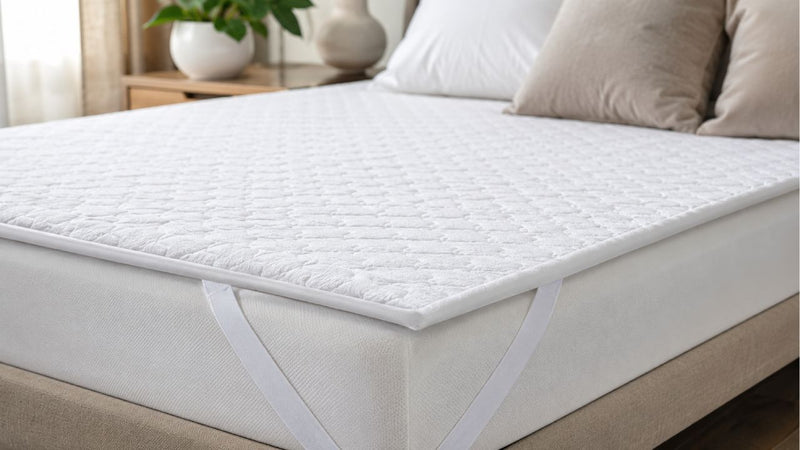
Egyptian cotton bed linen represents the best you can give your sleep. The extra-long fibres from the Nile Delta result in a fabric that becomes softer with every wash, hardly pills, and lasts for decades. We spend one-third of our lives in bed – so choosing the right material is no small matter.
What is Egyptian Cotton? Origin and Special Characteristics
Egyptian cotton (Gossypium barbadense) primarily grows in the Nile Delta. The combination of moist, nutrient-rich soil, many hours of sunshine, and cool nights creates conditions that are optimally found nowhere else. The result is fibres with a staple length of 35 to 45 mm – significantly longer than the 20 to 30 mm of regular cotton.
Important: Real Egyptian cotton is hand-picked. This is the only way to keep the fibres straight and undamaged. Machine harvesting damages the fibres and significantly reduces quality.
TerraBeds Tip: Look for the Cotton Egypt Association (CEA) certificate. Only certified products guarantee 100% genuine Egyptian cotton.
Egyptian Cotton Bed Linen vs. Standard Cotton: 7 Differences
A direct comparison shows why Egyptian cotton bed linen accounts for 0.5% of world production – and yet is the first choice in luxury hotels worldwide:
|
Characteristic |
Egyptian Cotton |
Standard Cotton |
|
Fibre Length |
35–45 mm (long staple) |
20–30 mm |
|
Softness |
Extremely soft |
Medium |
|
Durability |
Very high |
Medium |
|
Pilling |
Hardly any (anti-pill) |
Frequent |
|
Harvest |
Hand-picked |
Machine-picked |
|
World Production |
0.5 % |
99.5 % |
|
Thread Count (TC) |
400–700 TC ideal |
150–300 TC |
Conclusion: Normal cotton feels rough after 20 washes. Egyptian cotton bed linen becomes softer. That alone justifies the higher price.
Features in Detail: What Makes Egyptian Cotton So Special?
1. Long-staple Fibre – the Basis for Everything
The fibre length of 35–45 mm allows for spinning extremely thin, yet tear-resistant yarns. The thinner the yarn, the smoother and softer the fabric. Short fibres, on the other hand, break more frequently during spinning – this creates protruding fibre ends that appear as pilling.
2. Natural Anti-Pill Effect
Egyptian cotton naturally forms hardly any knots. Other types of cotton lose their smooth look after a few months. Egyptian cotton bed linen remains flawless for years.
3. Temperature Balance – Pleasant All Year Round
The hollow spaces in the fibre absorb and release moisture. In summer, the material cools. In winter, it keeps you warm. Those who sweat or freeze at night benefit directly from this property.
4. Sateen Weave – Luster Meets Comfort
Many Egyptian cotton bed linens are processed as Mako-sateen. The sateen weave technique (4:1 weave) places more threads on the upper side of the fabric – this creates the characteristic luster and the silky-soft feel on the skin.
5. Hygiene and Absorbency
Cotton absorbs up to 20% of its own weight in moisture without feeling wet. This keeps the sleeping environment hygienic and comfortable. Particularly important for people with sensitive skin or allergies.
Thread Count: What Does TC Mean for Egyptian Cotton?
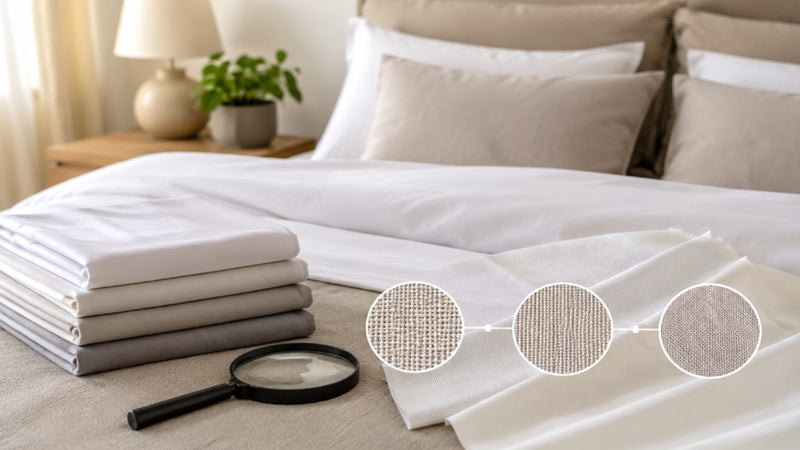
Thread Count (TC) refers to the number of warp and weft threads per square inch of fabric. For Egyptian cotton bed linen, the following applies:
- 200–300 TC: Good entry-level quality, cool percale feeling
- 400–600 TC: Ideal range for luxury sateen – soft, durable
- 700+ TC: Marketing numbers often inflated by multi-ply yarns – scrutinise carefully
Important: A 400 TC made of genuine Egyptian cotton always beats an 800 TC made of cheap blended cotton in terms of quality and durability.
Real vs. Fake Egyptian Cotton: How to Spot the Difference
Numerous manufacturers label inferior blended fabrics as "Egyptian cotton." 3 distinguishing features for genuine quality:
1. CEA Certificate: The Cotton Egypt Association (CEA) tests products via DNA certification processes. Only certified goods may carry the official label.
2. Transparent Origin: Reputable suppliers specify the region of origin and the loom. Vague statements like "Egyptian inspired" are warning signs.
3. Price: A 135x200 cm duvet cover under 30 € cannot contain genuine Egyptian cotton. The real costs for material and craftsmanship do not allow for it.
Care Instructions: How to Wash Egyptian Cotton Bed Linen Correctly
Proper care is crucial for your Egyptian cotton bed linen to stay beautiful for years. 4 rules:
Washing: 40 °C in the washing machine, delicate cycle or gentle wash. No heavy-duty detergents with bleach.
Dryer: Low temperature setting (level 1–2). Cotton shrinks with heat – short drying time, remove slightly damp.
Ironing: Hot ironing is easily possible (level 3, slightly damp). Sateen fabric shines particularly beautifully after ironing.
Storage: Store dry, loosely folded. Avoid plastic bags – cotton needs air circulation.
Tip: Fabric softener reduces absorbency. Avoid it or use a minimal amount.
Sustainability: Egyptian Cotton and the Environment
Many suppliers only talk about softness – and overlook the sustainability issue. A closer look is worthwhile:
Longevity as Sustainability: Bed linen that lasts 10 years consumes fewer resources than 5 cheap sets that are disposed of after 2 years.
Water and Chemicals: High-quality long-staple cultivation requires fewer pesticides than short-staple crops. Hand-picking avoids heavy harvesting machinery.
OEKO-TEX Standard 100: At TerraBeds, all bed linens are tested for harmful substances. Safe for skin and the environment.
The Right Products for Your Needs – TerraBeds Assortment
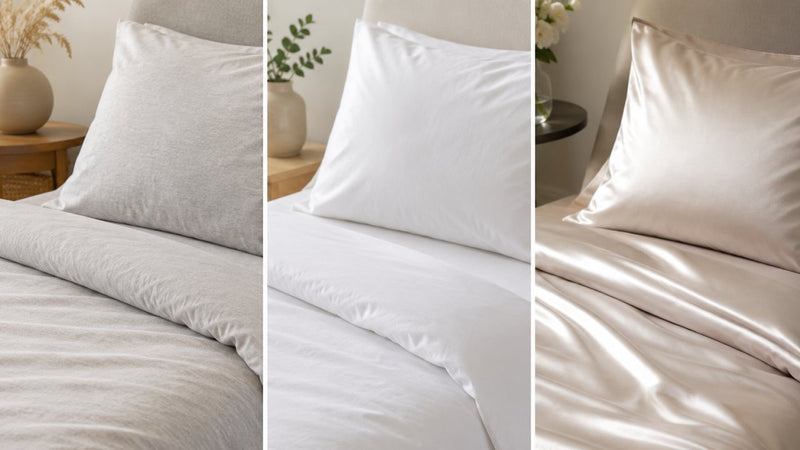
At TerraBeds, you will find Egyptian cotton bed linen in three versions that cater to every type of sleeper:
- Mako-sateen 400 TC: For those who love a silky feel and luster. Ideal all year round.
- Percale 300 TC: Cool, crisp feeling – first choice for warm sleepers.
- Sateen 600 TC Premium: The maximum. Hotel feeling at home, every night.
Further reading: Read our guide to thread count and fabric type at terrabeds.de/ratgeber for an informed purchasing decision.
Frequently Asked Questions (FAQ)
Is Egyptian cotton bedding really better than normal cotton?
Yes. The long-staple fibres (35–45 mm) produce stronger, softer yarns. The fabric lasts longer, doesn't pill, and gets softer with every wash instead of rougher – standard cotton cannot achieve this.
How do I recognise genuine Egyptian cotton bedding?
Look for the Cotton Egypt Association certificate. Genuine products bear a DNA-verified label. Vague claims like "Egyptian finish" without a certificate indicate blended fabrics.
What thread count (TC) is ideal for Egyptian cotton?
400–600 TC is the optimal range. Below that (200–300 TC), percale quality is good for those who sleep cool. Above 700 TC is often artificially increased by multi-ply yarns – which does not improve quality.
How do you wash Egyptian cotton bedding correctly?
40 °C, gentle cycle, no bleach. Tumble dry on a low setting or air dry. Hot ironing is possible and makes the sateen especially shiny.
Does Egyptian cotton bedding get softer over time?
Yes – that is one of its outstanding properties. While conventional cotton gets rougher after washing, Egyptian cotton increases in softness with every wash.
Is Egyptian cotton bedding suitable for allergy sufferers?
Yes. Natural cotton is hypoallergenic and breathable. Important: Look for OEKO-TEX certification to ensure no harmful substances from processing remain in the bedding.
Why is Egyptian cotton bedding so expensive?
It accounts for only about 0.5% of global cotton production. Added to that are hand-picking, certified processing, and a longer value chain. In return, it lasts 10–15 years instead of 2–3 years.
What is Mako sateen in Egyptian cotton?
Mako refers to the extra-long-staple Egyptian cotton (Gossypium barbadense). Sateen is the weaving technique (4:1 weave) that creates the characteristic sheen. Mako sateen combines both – and is considered the luxury material among beddings.
Can Egyptian cotton bedding be tumble dried?
Yes, on a low setting. Short drying time, remove slightly damp and smooth out. High heat shrinks all types of cotton – this also applies to Egyptian cotton.
Where else is Egyptian cotton grown besides Egypt?
Gossypium barbadense also grows in Turkey (Aegean region), Peru (Pima cotton), and the Sudan region. Only cotton from Egypt may bear the official CEA label "Egyptian Cotton".
Conclusion: Is Egyptian cotton bedding worth it?
Yes – for anyone who values long-term quality. Egyptian cotton bedding is not a short-term expense, but an investment. A set that lasts 10–15 years and gets better every night is more economical than three cheap sets in the same amount of time.
Anyone who spends a third of their life in bed should furnish this space with the best that nature has to offer.