The correct duvet filling weight is between 150 g for mid-summer and 1,500 g for cold winter nights. The rule of thumb: summer 150–400 g, transitional period 400–800 g, winter 800–1,500 g for standard size 135×200 cm (53×79 inches).
Three factors determine the appropriate weight: the season, the duvet size, and the filling material. This guide provides specific figures for every situation.
Duvets that are too light will leave you freezing, and those that are too heavy will make you sweat. Both errors disrupt sleep and can be avoided with the following tables and rules of thumb.
What does filling weight mean for a duvet?
The filling weight refers to the pure weight of a duvet's filling, excluding the cover fabric (inlet). Together with the filling material, it determines how warm a duvet keeps you.
Three factors influence the filling weight: the material, the duvet size, and the desired warmth class. The warmth class (also called warmth level) indicates the room temperature for which a duvet is designed. This classification is not DIN-standardized but has established itself as an industry standard.
A second important value is the TOG value (Thermal Overall Grade), a British unit of measurement for the thermal insulation of duvets. The higher the TOG value, the warmer the duvet keeps you.
Do not confuse the filling weight with the total weight of the duvet. The total weight also includes the inlet, seams, and any embroidery and is usually 300 to 500 g above the pure filling weight.
A third term frequently appears: fill power, measured in cuin (cubic inches). It describes how strongly down lofts back up after compression. As fill power increases, the necessary filling weight for the same warmth decreases, because the down traps more air per gram.
Manufacturers test fill power according to DIN EN 12130. Certifications such as Oeko-Tex Standard 100 and Downpass additionally confirm that the down has been tested for harmful substances and obtained in compliance with animal welfare standards. You will usually find this information on the label next to the filling weight.
What filling weight is suitable for summer?
A summer duvet needs 150 to 400 g of filling for 135×200 cm (53×79 inches). This light filling amount prevents night sweats.
Three materials are particularly suitable for summer duvets: down with a low filling weight, cotton, and silk. Cotton duvets often weigh only 200 to 350 g (7 to 12.3 oz) and regulate moisture well.
Silk duvets remain even lighter at 150 to 300 g (5.3 to 10.6 oz) and feel cool. For people who sleep warm, a filling weight of 150 g is even sufficient.
The baffle height of a summer duvet is usually only 2 to 3 cm (0.8 to 1.2 inches), as little filling requires little air volume.
What filling weight is suitable for the transitional period in spring and autumn?
A transitional duvet requires 400 to 800 g of filling for 135×200 cm. This medium weight covers room temperatures of 16 to 20 °C.
Many manufacturers call this category all-season duvet or warmth class 3. A 4-season duvet combines two individual duvets using press studs or Velcro fasteners.
This construction is particularly suitable for people with varying warmth needs, for example, when traveling frequently between differently heated apartments or with fluctuating outdoor temperatures in spring.
In spring and autumn, you only use one of the two duvets. In winter, you combine both duvets into a warmer unit with up to 1,200 g of filling. This solution saves you from buying a separate winter duvet.
What filling weight is suitable for winter?
A winter duvet needs 800 to 1,500 g of filling for 135×200 cm (53×79 inches), depending on the material. With 90% duck down, 800 to 1,000 g is sufficient for warmth class 4.
For microfiber, the requirement increases to 1,400 to 1,800 g (49.4 to 63.5 oz) for the same thermal performance. The reason lies in the fill power: down traps significantly more air per gram than synthetic fibers.
Three warmth classes cover winter needs: Class 4 for 12 to 16 °C, Class 5 for below 12 °C, and a combination of both for very cold bedrooms. People who easily feel cold choose the higher class. People who sweat at night stick to Class 4.
A common mistake: Many buyers opt for warmth class 5 because they feel cold in winter, although the actual problem is a too low room temperature or a too thin duvet in summer. Therefore, always measure the room temperature first before increasing the filling weight.
How do warmth class and TOG value differ?
The warmth class is a German industry system with 5 levels; the TOG value originates from Great Britain. Both systems measure the same property: the thermal insulation of a duvet.
The warmth class ranges from 1 (extra light) to 5 (extra warm). The TOG value ranges from approximately 2 (cool) to over 13 (extra warm). A TOG value of 4.5 roughly corresponds to warmth class 2, a TOG value of 10.5 roughly corresponds to warmth class 4.
German manufacturers such as Billerbeck, Ribeco, and Centa-Star mostly use the warmth class. Scandinavian and British brands like JYSK often also state the TOG value. When buying, check both specifications if you are comparing between providers.
Important: Neither the warmth class nor the TOG value are officially standardized. Both systems are based on manufacturer specifications and serve only as a rough guide for duvet filling weight.
Duvet filling weight by size: What weight suits your bed?
The duvet filling weight increases proportionally with the duvet size. A 200×200 cm duvet (79×79 inches) needs significantly more filling than a 135×200 cm duvet to provide the same warmth.
The following table shows recommended filling weights for four seasonal categories and five standard sizes. All figures apply to down fillings, except for the last column.
Five bed sizes cover the German market: the single bed with 90×200 cm, the standard double bed with 135×200 cm, the comfort size with 155×220 cm, the king-size bed with 200×200 cm, and the XL double bed with 240×220 cm. Always choose the row that matches your actual bed size, not the mattress size.
|
Size (cm / inch) |
Summer |
Transitional |
Winter (Down 90%) |
Winter (Microfiber) |
|
90×200 (35×79) |
150–300 g |
300–500 g |
600–800 g |
1,000–1,300 g |
|
135×200 (53×79) |
200–400 g |
400–800 g |
800–1,000 g |
1,400–1,800 g |
|
155×220 (61×87) |
250–500 g |
500–1,000 g |
1,000–1,200 g |
1,700–2,100 g |
|
200×200 (79×79) |
300–600 g |
600–1,200 g |
1,200–1,500 g |
2,000–2,500 g |
|
240×220 (94×87) |
400–700 g |
700–1,400 g |
1,400–1,800 g |
2,400–3,000 g |
Conversion: 1 cm is approximately 0.39 inches. 100 g is approximately 3.5 oz.
For couples who sleep separately, two individual duvets are recommended instead of one large duvet. More on this in our article about separate duvets for couples.
How does the filling material affect the filling weight?
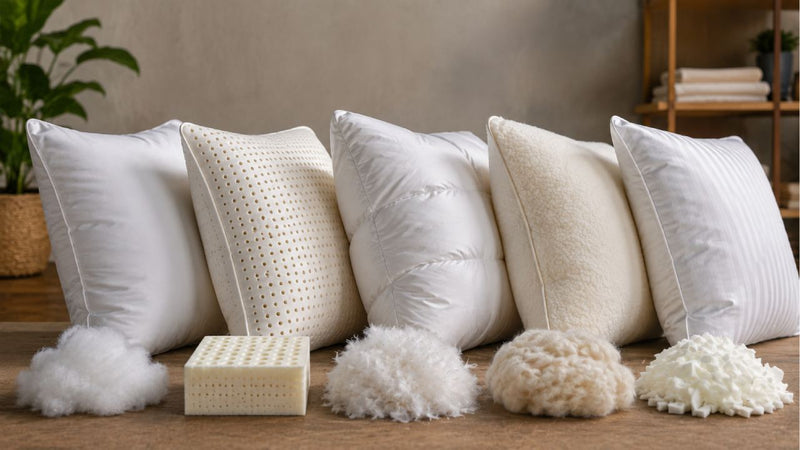
The filling material determines how much filling weight is needed for the same thermal performance. Four materials dominate the market: duck down, goose down, microfiber, and natural hair like camel hair or merino wool.
German brands such as Billerbeck, Ribeco, and Centa-Star offer all four materials in different filling weights. When buying, always compare filling weight, down content, and warmth class together, not just the price per duvet.
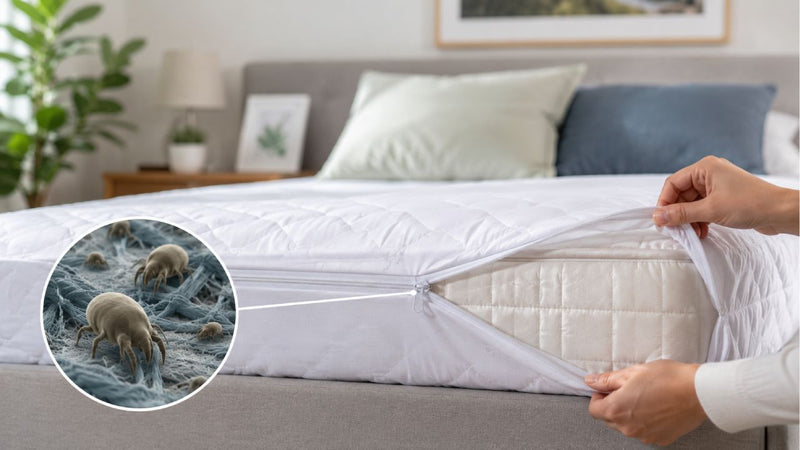
Allergy sufferers often opt for microfiber or specially treated down with mite protection certificates. Both variants are washable at 60 °C and significantly reduce the accumulation of dust mites in the filling.
Duck down vs. goose down
Duck down with 90% down content reaches warmth class 4 from just 800 g. Goose down has a higher fill power of 650 to 800 cuin, compared to 500 to 650 cuin for duck down.
Therefore, a goose down duvet provides noticeably more warmth at the same filling weight. For the same warmth, 700 to 900 g of goose down is often sufficient instead of 800 to 1,000 g of duck down.
Microfiber and natural hair as alternatives
Microfiber duvets are washable at 60 °C and allergy-friendly but require almost twice as much filling weight as down duvets. Natural hair like camel hair or merino wool actively regulates moisture and is suitable for people who sweat at night.
These fillings usually weigh 10 to 20% more than down for the same warmth class. An overview of pillow fillings is provided in our pillow filling comparison, as similar principles apply to pillows.
Box stitching and baffle height: Why construction matters
Filling weight alone says little if the construction is not right. Two duvets with identical filling weight can provide completely different warmth, depending on how the filling is distributed.
In a simple quilted duvet, manufacturers sew the top and bottom fabrics directly together. A cold spot, an area without filling, is created at each seam, through which heat escapes. This type of construction is suitable for summer duvets, not for winter.
In box stitching, manufacturers sew baffles between the top and bottom fabrics. These baffles form chambers in which the filling is evenly distributed, without cold spots. Three baffle heights are common: 2 to 3 cm (0.8 to 1.2 inches) for summer duvets, 3 to 5 cm (1.2 to 2 inches) for transitional duvets, and 5 to 8 cm (2 to 3.1 inches) for winter duvets.
A higher baffle height gives the filling more room to loft. More loft volume means more trapped air and thus better insulation, even with the same filling weight.
Also, pay attention to the box size. Smaller boxes, such as 6 by 8 compartments for 135×200 cm, hold the filling more evenly than large boxes and prevent the filling from collecting in one corner.
How to find the right filling weight for your bedroom?
To find the right filling weight for your bedroom, first measure the room temperature on cold nights. Three steps will lead you to the appropriate warmth class.
Measure room temperature and derive warmth class
Place a thermometer in the bedroom and note the temperature on the coldest winter evenings. At 14 to 18 °C, warmth class 4 is sufficient. Below 12 °C, you need warmth class 5 or a combination of two duvets.
Assess personal warmth perception
People feel cold to different degrees. If you generally feel cold, choose the next higher warmth class. If you sweat at night, stick to the lower level and open a window if necessary.
Couples with different warmth perceptions often solve this problem with two separate single duvets instead of one shared large duvet. This way, each person chooses their own suitable filling weight without compromise.
Match duvet size and bedding correctly
A duvet that is too small allows warm air to escape at the edges in winter. For beds over 180 cm (71 inches) wide, we recommend the size 200×200 cm or larger.
Duvet filling weight for box spring beds and high mattresses
Box spring beds and high topper mattresses change the perceived duvet size. A mattress height of 30 cm (11.8 inches) or more makes a standard duvet appear optically smaller, even if the filling weight remains unchanged. The same applies to high toppers with baffle heights up to 25 cm (9.8 inches), as are common with modern fitted sheets.
For high mattresses, choose a duvet size that is at least 20 cm (7.9 inches) longer and wider than the mattress. This prevents drafts at the sides, regardless of the chosen filling weight.
Check the appropriate size with our size guide before ordering bedding and covers.
Quick overview: Seasonal duvet change
|
Task |
Timing |
Method |
Difficulty |
|
Store summer duvet |
End of May |
Wash at 40 °C, store dry |
Easy |
|
Use transitional duvet |
September–October |
Combine two duvets |
Medium |
|
Change to winter duvet |
November |
Choose cover with 3–5 cm allowance |
Easy |
|
Check warmth class |
Annually in autumn |
Measure room temperature |
Easy |
How to properly care for and store your duvet?
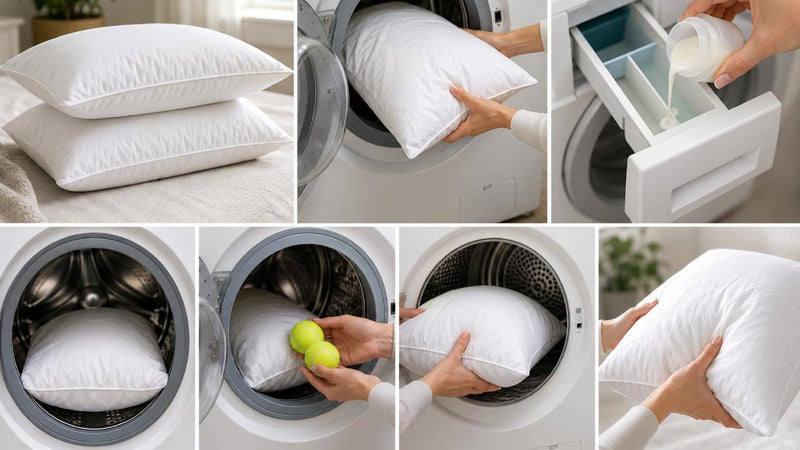
To properly care for your duvet, wash it at a maximum of 40 °C with liquid fine detergent. Fabric softener glues down and feathers together and destroys the loft volume.
Dry down duvets in the dryer at low temperature with 2 to 3 tennis balls. The balls fluff up the filling and prevent clumping. Microfiber duvets usually tolerate 60 °C and dry faster.
Ideally, wash the summer duvet in autumn before switching to the winter duvet. This way, you start the next spring with a fresh, odorless duvet. Store unused duvets dry, airy, and in a breathable cotton bag, never in plastic.
Three signs indicate that a duvet has reached the end of its life: lumpy filling after shaking, a significant weight loss compared to the label, and a musty smell after washing. Down duvets last 10 to 15 years with good care, microfiber duvets usually 5 to 8 years.
Shake your duvet briefly every morning. This simple ritual redistributes the filling and maintains the loft volume significantly longer than infrequent washing alone.
Frequently asked questions about duvet filling weight
How many grams should a winter duvet have?
A winter duvet in standard size 135×200 cm should have 800 to 1,000 g of filling weight with 90% down content. Microfiber duvets require 1,400 to 1,800 g for the same thermal performance. For larger beds like 200×200 cm, the requirement increases proportionally to 1,200 to 1,500 g of down.
Is an all-season duvet sufficient for winter?
No, an all-season duvet is only sufficient for winter at room temperatures above 18 °C. For most bedrooms in Germany, a dedicated winter duvet is necessary.
Is a heavier duvet automatically warmer?
Yes, a higher filling weight generally means more warmth, assuming the material and construction remain the same. Two duvets with the same weight but different baffle heights will still provide different warmth. Therefore, also pay attention to the box stitching and the warmth class on the label.
Is a goose down duvet worth it compared to duck down?
Ja, wenn Sie maximale Wärme bei minimalem Gewicht suchen. Gänsedaunen erreichen dieselbe Wärmeklasse mit 100 bis 200 g weniger Füllung als Entendaunen.
Wie oft sollten Sie das Füllgewicht Ihrer Bettdecke anpassen?
Prüfen Sie die Wärmeklasse jährlich im Herbst, besonders nach einem Umzug oder einer Heizungsumstellung. Die Raumtemperatur bestimmt, ob Ihr aktuelles Füllgewicht noch passt. Auch nach 8 bis 10 Jahren verliert Füllung an Bauschkraft, sodass ein höheres Füllgewicht nötig wird.
Fazit: Das passende Füllgewicht für jede Saison
Das passende Bettdecke Füllgewicht hängt von Jahreszeit, Deckengröße und persönlichem Wärmeempfinden ab. Mit den Werten aus diesem Ratgeber finden Sie die richtige Wärmeklasse für Sommer, Übergangszeit und Winter.
Nutzen Sie die Größentabelle, um Ihr genaues Bettmaß zu bestimmen, und die Materialübersicht, um zwischen Daunen, Mikrofaser und Naturhaar zu wählen. Ein durchdachtes Füllgewicht sorgt für erholsamen Schlaf in jeder Nacht des Jahres.
Passende Spannbettlaken und Bettwäsche für jede Deckengröße finden Sie in der Terra Beds Spannbettlaken Kollektion. Kombinieren Sie Ihre neue Bettdecke mit einem Spannbettlaken aus 100 % Baumwolle für erholsamen Schlaf in jeder Saison.