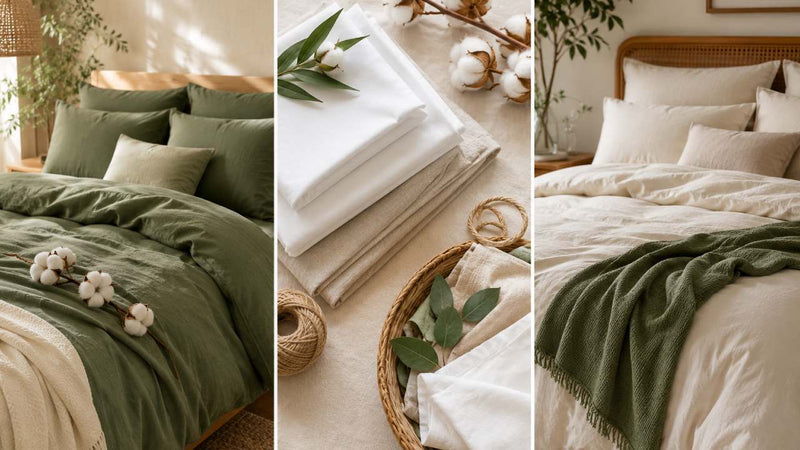
Which bedding is right for which season depends on 3 factors: the material, your body temperature during sleep, and the room temperature in the bedroom. Flannel and beaverette provide warmth in winter, linen and percale cool in summer. In between, there are all-rounders like jersey and Mako-satin that work all year round. This guide shows you the right material for each of the 4 seasons, explains the differences specifically, and provides you with a quick reference table.
Which bedding for which season – the overview table
|
Material |
Spring |
Summer |
Autumn |
Winter |
Sleeper Type |
|
Flannel |
– |
– |
✓ |
✓✓✓ |
Cold sleepers, cool rooms |
|
Beaverette |
– |
– |
✓ |
✓✓✓ |
Very cold sleepers, below 16°C |
|
Winter Jersey |
– |
– |
✓✓ |
✓✓ |
All-season, easy care |
|
Jersey (Single) |
✓✓ |
– |
✓✓ |
✓ |
All-rounder, families |
|
Mako-Satin |
✓✓ |
✓✓ |
✓✓ |
✓ |
Warm sleepers, luxurious feel |
|
Percale / Linon |
✓✓ |
✓✓ |
✓ |
– |
Warm sleepers, summer |
|
Renforce |
✓ |
✓✓ |
✓ |
– |
Affordable all-rounder |
|
Linen |
✓✓ |
✓✓✓ |
✓ |
– |
Heavy sweaters, summer |
|
Lyocell / Tencel |
✓✓ |
✓✓✓ |
✓✓ |
✓ |
Sensitive skin, allergy sufferers |
✓✓✓ = ideal | ✓✓ = well suited | ✓ = possible | – = not recommended
Which bedding in spring?
In spring, temperatures fluctuate, warm during the day, still cool at night. The best bedding for spring is breathable, slightly warming, and adaptable. Not maximum insulation, but not purely cooling material either.
4 materials for spring bedding:
- Percale: finely and densely woven, hotel-like feel, slightly cooling, ideal when the nights are still fresh
- Mako-Satin: silky smooth, temperature-regulating, elegant, usable all year round
- Jersey (Single): snug, elastic, breathable, iron-free and easy to care for
- Linen: naturally temperature-regulating, slightly cooling, perfect if spring starts warm
For spring, you don't need an extra set: A good fitted sheet made of 100% cotton from Terra Beds works all year round – 160 g/m² Jersey-cotton, OEKO-TEX® certified, corner height up to 25 cm.
Which bedding for summer?
In summer, bedding needs 3 qualities: air permeability, fast moisture wicking, and a cool feel on the skin. Heavy, napped fabrics like flannel or beaverette are unsuitable in summer; they trap heat and moisture.
Linen – the best summer bedding
Linen is the coolest bedding for summer. The natural flax fibres absorb up to 20% of their own weight in moisture and still dry quickly. This creates a cooling effect on the skin. Linen becomes softer with increasing washes; it improves with every wash. The downside: linen bedding wrinkles easily and is more expensive than cotton alternatives.
Lyocell / Tencel – the coolest high-tech option
Lyocell (Tencel) absorbs 50% more moisture than cotton and wicks it away faster. This makes the fabric ideal for people who sweat heavily at night. Lyocell is hypoallergenic, environmentally friendly (made from wood pulp) and feels silky soft. For allergy sufferers and people with sensitive skin, Lyocell is the best summer option.
Mako-Satin and Percale – the classic summer bedding
Mako-Satin feels cool and has a slight sheen. The tight weave ensures durability; Mako-Satin bedding lasts 10+ years with proper care. Percale (also Linon bedding) is a cheaper alternative with similar cooling properties. Linon bedding is suitable for the warm season – spring, summer and early autumn. In winter, Linon is too thin and cold.
Matching the summer bedding: fitted sheet 90x200 cm for a single bed or 180x200 cm for a king-size bed – 100% cotton, breathable, OEKO-TEX®.
Which bedding for autumn?
Autumn is the transition period; nights get cooler, but real winter cold isn't here yet. Good autumn bedding balances warmth and breathability. Jersey is the ideal choice here, as it retains warmth without overheating.
3 ideal materials for autumn:
- Jersey (Standard or Winter Jersey): gently warming, remains breathable, no risk of overheating
- Percale / Mako-Satin: for warmer sleepers, temperature-regulating well into autumn
- Flannel (light variant): from October when nights get cooler than 15°C
Winter jersey bedding 135x200 cm is the best-selling bedding set in autumn in Germany; it fits the standard size for single beds and keeps you pleasantly warm even at 10–14°C room temperature.
Which bedding in winter?
In winter, flannel is the best bedding, beaverette is the warmest. Both fabrics have napped cotton surfaces that create small air pockets. This air layer insulates body heat particularly effectively. Jersey also works well in winter but warms less intensely than flannel.
Flannel – the winter classic
Flannel is the most popular winter bedding in Germany. The fabric is woven from fine cotton threads and napped on both sides – the result is a velvety, warm feel. Flannel is more breathable than beaverette and therefore better suited for people who sweat easily during sleep. Flannel bedding can be washed at 60°C – hygienic and mite-killing.
Beaverette – maximum warmth for cold sleepers
Beaverette is more densely woven than flannel and therefore warmer. The fabric is heavier, the fluff is more pronounced. Beaverette is suitable for bedrooms below 16°C and people who get very cold in bed. However, if you sweat heavily at night, you should avoid beaverette – its dense structure wicks away moisture more slowly.
Beaverette vs. Flannel in direct comparison:
|
Property |
Beaverette |
Flannel |
|
Warmth |
★★★★★ Very high |
★★★★☆ High |
|
Breathability |
★★★☆☆ Medium |
★★★★☆ Good |
|
Weight |
Heavier |
Lighter |
|
Fluffiness |
More pronounced |
Softer, finer |
|
For sweaters |
Not ideal |
More suitable |
|
Washable at |
60°C |
60°C |
|
Price |
Medium |
Inexpensive–Medium |
The right foundation in winter: fitted sheet 140x200 cm made of jersey cotton – stretchy, warm, OEKO-TEX® certified. In combination with a flannel duvet cover, this creates the optimal winter equipment.
Which bedding type for which season – by material
Flannel bedding – for which season?
Flannel is clearly winter bedding. From October / November, it's worth switching. In summer, flannel is too warm and can cause overheating. In spring and early autumn, flannel may still be suitable for very cold-sensitive people; for others, it's too early.
Percale bedding – for which season?
Percale is bedding for spring, summer, and early autumn. The densely woven, smooth fabric (also known as hotel bedding) feels fresh and cool. In winter, percale does not provide sufficient thermal insulation, but with a warm duvet, it also works in autumn. Linon bedding is suitable for the same seasons as percale – both are plain-woven cotton fabrics with cooling properties.
Jersey bedding – for which season?
Jersey works all year round – standard jersey in spring and autumn, winter jersey also in winter. The knit structure makes jersey elastic, iron-free, and easy to care for. Winter jersey bedding 135x200 cm is particularly suitable for single beds in autumn and winter. Interlock jersey (double knit) is the warmest jersey variant.
Mako-Satin – for which season?
Mako-Satin can be used all year round, best in spring, summer, and autumn. In winter, Mako-Satin provides moderate warmth, but is more breathable than flannel. For people who don't get cold even in winter and prefer satin bedding for its luxurious feel, Mako-Satin is a good all-season option.
Linen bedding – for which season?
Linen is primarily summer bedding. Its cooling properties are an advantage in summer, a disadvantage in winter. In spring and early autumn, linen is suitable for people who sweat easily. In winter, linen is too cool for most people, unless the bedroom is well heated.
Renforce bedding – for which season?
Renforce is bedding for summer and transitional seasons. The most affordable cotton fabric for bedding is light, breathable, and found in almost every German household. In winter, it lacks thermal insulation, so it's better to switch to flannel or beaverette.
Bedding sizes for every season: What fits which bed?
Bedding size is season-independent; the dimensions are based on the bed, not the season. Standard sizes in Germany:
|
Bedding Size |
Bed Type |
Matching Fitted Sheet |
|
135 x 200 cm |
Single Bed (Standard DE) |
90x200 cm |
|
155 x 220 cm |
Single Bed Oversize |
90x200 or 140x200 cm |
|
200 x 200 cm |
Double Bed (1 duvet) |
180x200 cm |
|
200 x 220 cm |
Partner Bed (Standard) |
180x200 cm |
|
135 x 200 cm |
Winter Bedding 135x200 Flannel |
90x200 cm |
Terra Beds supplies fitted sheets in all German standard sizes from 90x200 to 200x200 cm, with a corner height up to 25 cm for box spring beds and topper mattresses. All pillowcases (40x40 to 80x80 cm) are also OEKO-TEX® certified.
Proper bedding care – according to season and material
3 basic rules apply to all bedding materials all year round:
- Change rhythm: every 1–2 weeks. More frequently in summer (more sweating), every 2 weeks in winter.
- Washing: Flannel, beaverette, and cotton at 60°C kills mites. Satin and linen maximum 40°C. Jersey washed at 40°C inside out.
- Lagern: Winterbettwäsche im Sommer sauber waschen und in einem Baumwollbeutel lagern nicht in Plastik, damit das Material atmen kann.
Sommerbettwäsche aus Leinen oder Satin: kein Weichspüler er zerstört die Fasern und reduziert die Atmungsaktivität. Für Flanell und Biber gilt: Weichspüler macht den Flausch weicher, reduziert aber die Wärmespeicherung besser ohne.
Kinderbettwäsche: Welches Material für welche Jahreszeit?
Kinder schwitzen stärker als Erwachsene und reagieren empfindlicher auf Überhitzung. Deshalb gelten andere Prioritäten:
- Sommer: Jersey oder leichte Baumwolle nie Flanell oder Biber, Überhitzungsgefahr
- Winter: leichter Flanell oder Jersey nicht das schwerste Biber-Gewebe
- Ganzjährig: Lyocell oder Baumwoll-Jersey temperaturregulierend, hypoallergen
- Material: immer OEKO-TEX® Standard 100 keine Farbstoffe, Pestizide oder Formaldehyd
Für Kinder-Betten: Kinder-Spannbettlaken 60x120 cm und 70x140 cm von Terra Beds 100% Baumwolle, OEKO-TEX® zertifiziert, schadstoffgeprüft. Ganzjährig einsetzbar für alle Bettwäsche-Materialien.
Häufig gestellte Fragen: Welche Bettwäsche für welche Jahreszeit?
Welche Bettwäsche für welche Jahreszeit eignet sich am besten?
Flanell und Biber für Winter, Leinen und Perkal für Sommer, Jersey für Frühling und Herbst. Mako-Satin ist ganzjährig einsetzbar. Lyocell und Tencel funktionieren das ganze Jahr und sind besonders für Allergiker und Personen mit sensibler Haut geeignet.
Linon-Bettwäsche – für welche Jahreszeit?
Linon ist Frühlings- und Sommerbettwäsche. Der Stoff ist aus Baumwolle, ähnlich glatt und fein wie Perkal, aber günstiger. Im Winter bietet Linon keine ausreichende Wärme. Für Kinderzimmer und günstige Sommerbettwäsche ist Linon eine bewährte Wahl.
Was ist die beste Bettwäsche überhaupt?
Es gibt keine universell beste Bettwäsche es gibt die passende Bettwäsche für deine Situation. Wer friert: Flanell. Wer schwitzt: Leinen oder Lyocell. Wer einen Allrounder will: Jersey. Wer Luxus bevorzugt: Mako-Satin. Die Kombination aus Material, Kissenart und dem richtigen Spannbettlaken entscheidet über die Schlafqualität.
Welche Bettwäsche im Winter für 135x200 cm?
Flanell-Bettwäsche 135x200 cm ist die beliebteste Winterwahl für Einzelbetten in Deutschland. Das Set enthält einen Bettbezug 135x200 cm und einen Kissenbezug 80x80 cm. Alternativ: Winterjersey 135x200 cm weniger warm als Flanell, aber pflegeleichter und ganzjährig nutzbar.
Satin oder Flanell im Winter?
Flanell wärmt stärker, Satin ist atmungsaktiver. Wer schnell friert, wählt Flanell. Wer im Winter zwar Wärme braucht, aber schnell schwitzt, ist mit Mako-Satin besser bedient. Mako-Satin speichert Körperwärme und leitet Feuchtigkeit schneller ab als Flanell.
Kann ich Flanell-Bettwäsche das ganze Jahr verwenden?
Technisch ja aber im Sommer ist Flanell für die meisten Menschen zu warm. Im Sommer verursacht Flanell oft Überhitzung und Schwitzen. Nur wer sehr kälteempfindlich ist oder das Schlafzimmer stark kühlt (unter 18°C Raumtemperatur), kann Flanell ganzjährig nutzen.
Welche Bettwäsche-Art ist am pflegeleichtesten?
Jersey-Bettwäsche ist am pflegeleichtesten: bügelfrei, bei 40–60°C waschbar, kaum Einlaufen. Flanell ist ebenfalls unkompliziert (60°C). Am aufwendigsten ist Leinen es knittert stark und muss oft gebügelt oder bewusst knitterig akzeptiert werden. Mako-Satin braucht niedrige Waschtemperaturen (40°C) und darf nicht im Trockner landen.
Fazit: Welche Bettwäsche für welche Jahreszeit?
Welche Bettwäsche für welche Jahreszeit am besten passt, lässt sich in 4 einfachen Regeln zusammenfassen: Flanell und Biber im Winter, Leinen und Perkal im Sommer, Jersey in den Übergangszeiten, Mako-Satin und Lyocell ganzjährig. Das Spannbettlaken spielt dabei eine unterschätzte Rolle es trägt zur Wärme- oder Kühleregulierung von unten bei.
Bei Terra Beds findest du Spannbettlaken aus 160 g/m² Jersey-Baumwolle in allen deutschen Standardgrößen von 90x200 bis 200x200 cm. Alle Produkte sind OEKO-TEX® Standard 100 zertifiziert, frei von Schadstoffen, waschbar bei 60°C und mit Steghöhe bis 25 cm. Kostenloser Versand ab 49 €, 14 Tage kostenlose Rückgabe.