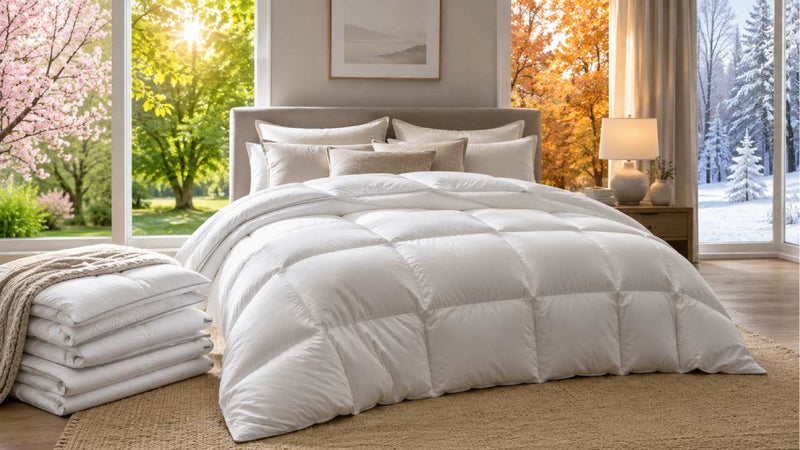
The difference between a down duvet and a quilted duvet lies in the filling and the quilting technique. A down duvet contains goose or duck down, while a quilted duvet achieves a firm inner structure through parallel seams.
Many buyers confuse the two terms because a down duvet is almost always also a quilted duvet. This guide explains the technical differences, lists the 5 most important quilting types, and shows which duvet suits your sleeping habits.
Additionally, you will learn how to check filling weight, fill power, and certifications when buying, which size fits your bed, and how to properly care for your new duvet for many years.
What is the difference between a down duvet and a quilted duvet?
The difference between a down duvet and a quilted duvet concerns 2 different levels of a duvet: the filling material and the construction. Down refers to the filling, quilting refers to the sewing technique that keeps this filling in place.
A duvet can therefore be both a down duvet and a quilted duvet if it is filled with down and also quilted. Pure synthetic fiber duvets, cotton duvets, and natural hair duvets are also quilted but do not contain down.
This distinction explains why online shops and specialist retailers often use the terms inconsistently. When buying, always ask about the exact filling and quilting type, not just the product name.
What is a down duvet?
A down duvet is a duvet whose filling consists entirely or partially of goose down or duck down. High-quality down duvets contain at least 80 percent down and a maximum of 20 percent feathers.
Down are the soft, fluffy feathers under the contour feathers of waterfowl. They have no rigid quill and thus form small air chambers that store warmth without adding much weight.
Fill power describes how much a down re-expands after being compressed. A fill power of 600 Cuin or higher is considered high-quality and provides noticeably more warmth with the same filling weight.
Down duvets are suitable for people who prefer a light yet warm duvet. The 3-dimensional structure of the down distributes body heat evenly while regulating moisture in the bed.
What is a quilted duvet?
A quilted duvet is a duvet where the top and bottom fabrics are connected by seams to prevent the filling from shifting. The term describes the quilting technique, not the filling material.
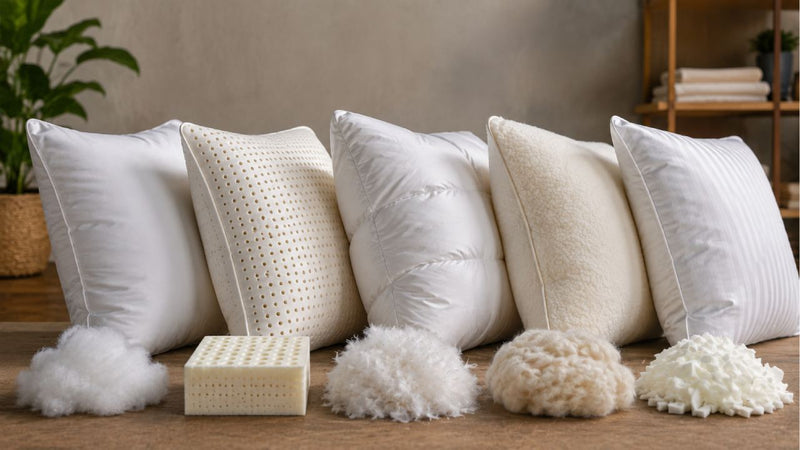
The filling of a quilted duvet can consist of down, feathers, cotton, virgin sheep's wool, or synthetic fibers such as polyester. Without quilting seams, loose filling would quickly accumulate in one corner of the duvet.
Quilted duvets with synthetic fiber filling usually weigh more than down duvets of the same size because synthetic fibers trap less air. A model in the size 135 x 200 cm (53 x 79 inches) often weighs between 1,200 and 1,800 grams.
Quilted duvets can often be washed at 60 degrees Celsius (140 degrees Fahrenheit) and therefore dry faster than pure down duvets. This property makes them a practical choice for families with children and for dust mite allergy sufferers.
Down duvet vs. quilted duvet: The most important differences in comparison
A direct comparison shows that down duvets and quilted duvets differ significantly in weight, thermal performance, and care. Down duvets are usually 30 to 50 percent lighter than quilted duvets with fiber filling for the same thermal performance.
Weight and thermal performance in comparison
A winter duvet with 100 percent down in the size 155 x 220 cm (61 x 87 inches) often weighs between 1,200 and 1,500 grams. A comparably warm fiber duvet often weighs between 2,000 and 2,500 grams.
The reason lies in the structure of the filling. Down forms 3-dimensional air chambers, while synthetic fibers must store heat through the sheer quantity of material.
Filling material: down, feathers, and fibers
Manufacturers distinguish 3 main categories for filling: down and feathers, natural fibers such as cotton or virgin wool, and synthetic fibers such as polyester or microfiber. Each category influences weight, warmth, and care requirements differently.
Mixtures of 90 percent down and 10 percent feathers are considered a high-quality standard for warm winter duvets. Cheaper models often contain only 50 percent down and a higher feather content.
Care and washability
Quilted duvets with synthetic fiber filling are usually machine washable at 60 degrees Celsius (140 degrees Fahrenheit) and dry within a few hours. Down duvets require a large washing machine with at least 6 kg (13 lb) capacity and a long drying phase.
Those who want to invest little time in care benefit from an easy-care fiber duvet. Those who seek maximum warmth with low weight accept the higher care requirements of a down duvet.
What types of quilting are there for duvets?
Manufacturers use 5 common quilting types to evenly distribute the filling of a duvet. The quilting type largely determines how warm, heavy, and flexible the filling feels in the duvet.
Cassette duvet: The warmest construction
In a cassette duvet, internal baffles connect the top and bottom fabrics, forming individual chambers. The filling can expand in each chamber without migrating to another chamber.
This construction is particularly suitable for warm winter duvets with a high down content. Cassette duvets with a baffle height of 3 to 4 cm (1.2 to 1.6 inches) achieve a filling weight of 800 to 1,500 grams.
Box-stitch duvet: The classic for generous filling
The box-stitch duvet usually has 24 square quilting lines that directly connect the top and bottom fabrics. Within each square, the filling can still move slightly.
This quilting type is suitable for fillings with a higher feather content, such as 55 percent down and 45 percent feathers. The filling weight is often between 1,500 and 2,500 grams.
Quick-stitch and multi-stitch: Warm transitional variants
The quick-stitch usually connects the top and bottom fabrics with 54 baffles and a baffle height of 3.5 cm (1.4 inches). This construction is suitable for warm duvets with a filling weight between 780 and 960 grams.
The multi-stitch duvet works with up to 82 baffles and a baffle height of 2.5 cm (1 inch). It requires less filling than the quick-stitch and is therefore particularly suitable for transitional and all-season duvets.
Channel duvet and spot-quilt: The light variants
A channel duvet is quilted flat, making it flatter and lighter than a cassette duvet. This construction requires less filling and is therefore suitable for summer duvets.
In a spot-quilt, up to 99 individual spots connect the top and bottom fabrics without forming continuous baffles. Summer duvets with spot-quilting often weigh only 220 to 350 grams.
How to choose the right tog rating for your duvet?
The tog rating of a duvet depends on your personal warmth perception, the room temperature in the bedroom, and the season. 5 warmth ranges cover most needs: light, medium, warm, very warm, and all-season.
Tog rating for cold sleepers
Those who get cold quickly at night should choose a duvet from the warm or very warm category with a filling weight of 1,200 grams or more. A cassette duvet with a high down content reliably retains warmth without being too heavy.
In addition to the duvet, it's worth considering appropriate bed linen for the season, such as flannel in winter instead of light percale.
Tog rating for warm sleepers
Those who sweat quickly under the duvet should choose one level lower than standard perception suggests. A channel duvet or spot-quilted duvet with a filling weight under 800 grams regulates the temperature noticeably better.
The material of the duvet cover also significantly influences the sleeping climate. Breathable natural fibers dissipate excess heat faster than dense synthetic fabrics.
Which duvet size fits your bed?
The appropriate size depends on your mattress and your body height. The standard size 135 x 200 cm (53 x 79 inches) fits most single beds in Germany.
If you are taller or move a lot at night, a comfort size of 155 x 220 cm (61 x 87 inches) will be more comfortable. This size allows enough room so that the duvet does not slip off the mattress.
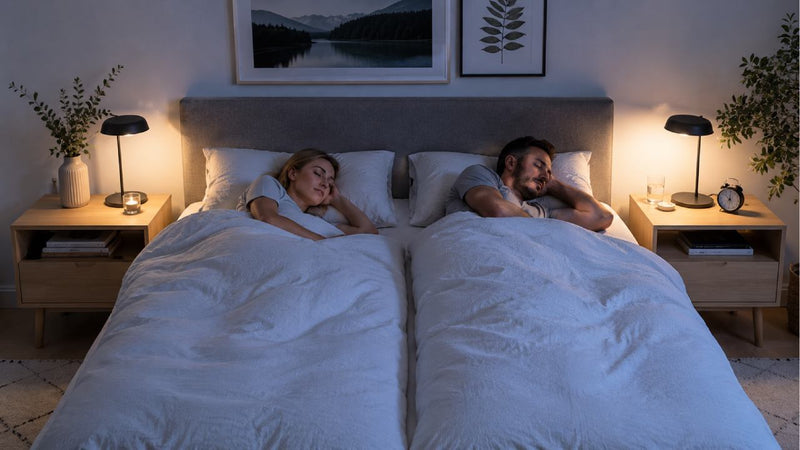
For double beds, many couples choose 2 individual duvets instead of one large shared duvet. This solution prevents nightly tugging at the duvet and allows each sleeper their own tog rating.
Special sizes up to 240 x 220 cm (94 x 87 inches) are available from specialized providers and are suitable for very large beds or for people with high warmth requirements.
Before buying, also check the mattress height, as a duvet that is too short allows cold air to enter at the sides. As a rule of thumb: the duvet should be 20 to 30 cm (8 to 12 inches) longer on each side than the mattress.
Tog rating for the transitional season
In spring and autumn, room temperature often fluctuates between 16 and 20 degrees Celsius (61 and 68 degrees Fahrenheit). A multi-stitch duvet with a medium filling weight reliably compensates for these fluctuations without becoming too warm.
Alternatively, some households combine a light summer duvet with a warmer winter duvet to create a 4-season solution. Both duvets can be connected with a button placket and thus adapt flexibly to any season.
How to identify a high-quality down duvet when buying?
High-quality down duvets can be identified by 3 measurable characteristics: the down content, the filling weight, and the certificate. A down content of at least 90 percent is considered a quality feature for warm winter duvets.
Checking filling weight and fill power
The filling weight alone says little about the thermal performance if the fill power is low. Therefore, specifically ask for the Cuin value, which indicates how much the down re-expands after compression.
A duvet with 700 grams of filling weight and high fill power can be warmer than a duvet with 1,000 grams and low fill power. Therefore, always compare both values together.
Certificates and origin of the down
The Downpass certificate and the Responsible Down Standard (RDS) confirm that the down was not plucked from live animals. Also look for an Oeko-Tex Standard 100 certification for the casing.
These proofs protect against animal cruelty in the supply chain and ensure that no harmful substances are contained in the cover fabric. Reputable retailers disclose these certificates in the product description.
For quilted duvets with synthetic filling, the Global Recycled Standard (GRS) provides information on the proportion of recycled material. A label with at least 50 percent recycled polyester is considered a solid basis for a sustainable purchasing decision in 2026.
The price provides another indication of quality. High-quality down duvets with 90 percent down content usually cost between 150 and 350 Euros, while simple quilted duvets with synthetic fiber filling are available from 25 Euros.
How do down duvets and quilted duvets differ in terms of environment and animal welfare?
Down duvets and quilted duvets leave different ecological footprints, depending on the raw material and manufacturing. Natural down is biodegradable, while synthetic fibers only decompose after many decades.
The Responsible Down Standard (RDS) prohibits live plucking and force-feeding of the parent animals of down suppliers. Certified farms are audited annually by independent inspection bodies.
Quilted duvets made from recycled polyester use raw materials from PET bottles or textile waste, thereby saving crude oil during production. These duvets are suitable for buyers who, for ethical reasons, do not want animal fillings.
Both materials can be recycled or composted at the end of their life, if manufacturers offer corresponding take-back programs. When purchasing, specifically ask about recycling and take-back options for 2026.
How to properly care for a down duvet?
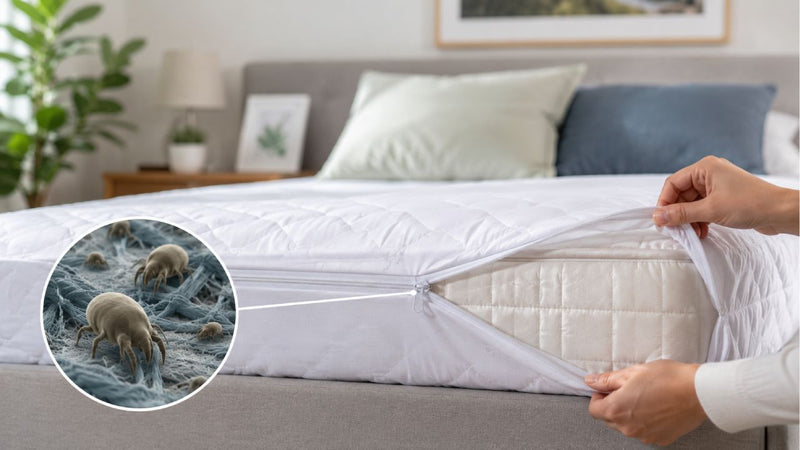
To properly care for a down duvet, air it daily for 10 minutes and wash it once a year at a low temperature. These 2 steps prevent dust mite infestation and maintain the fill power of the filling for many years.
For washing, use only a washing machine with at least 6 kg (13 lb) capacity, so that the down has enough room to move. Add 2 to 3 tennis balls to keep the filling fluffy during drying.
The following overview shows the most important care steps at a glance.
|
Task |
Timing |
Method |
Difficulty |
|
Daily airing |
Every morning, 10 minutes |
Shake out duvet and place over bed edge |
Easy |
|
Washing the quilted duvet |
Every 3 to 4 months |
Washing machine at 60°C (140°F) |
Easy |
|
Washing the down duvet |
Once a year |
Washing machine with 6 kg (13 lb) capacity |
Medium |
|
Professional cleaning |
Every 3 to 5 years |
Specialist company with down washing and drying |
Medium |
|
Complete replacement |
After 10 to 15 years |
Choose new duvet according to warmth needs |
Easy |
Also choose a suitable fitted sheet material for your duvet that absorbs moisture just as well as the duvet itself. Cotton jersey is particularly suitable for this, as it absorbs moisture and releases it quickly.
Down duvet or quilted duvet: What suits you?
The decision between a down duvet and a quilted duvet depends on 3 factors: your warmth needs, your willingness to care for it, and any allergies. If you are looking for a light, very warm duvet that requires little care, choose a high-quality down duvet.
If you need an easy-care, washable duvet for children or allergy sufferers, choose a quilted duvet with synthetic fiber filling. Before buying, always compare filling weight, quilting type, and certifications, rather than relying solely on the product name.
This way, in 2026, you will find the duvet that suits your sleeping habits and your budget. Then complete your bed with 100 percent cotton products from Terra Beds and discover matching pillowcases that stylishly complement the material and color of your new duvet.
Frequently asked questions about down duvets and quilted duvets
Is a down duvet warmer than a quilted duvet?
Yes, a down duvet with a high down content provides more warmth at the same weight than a quilted duvet with synthetic fiber filling. The reason lies in the 3-dimensional air chambers of the down, which store heat more efficiently than flat synthetic fibers.
Can you wash a down duvet in the washing machine?
Yes, most down duvets can be washed at 30 to 60 degrees Celsius (86 to 140 degrees Fahrenheit) if the machine has at least 6 kg (13 lb) capacity. Use a delicate detergent without fabric softener to preserve the fill power.
Is a quilted duvet suitable for allergy sufferers?
Yes, quilted duvets with synthetic filling are usually washable at 60 degrees Celsius and are therefore well suited for dust mite allergy sufferers. Regular washing reliably removes dust mites from the tightly woven casing.
How long does a high-quality down duvet last?
A high-quality down duvet lasts 10 to 15 years with proper care before the fill power noticeably decreases. Regular airing and professional cleaning further extend its lifespan.
What is the main difference between a down duvet and a quilted duvet?
The main difference lies in the filling: down duvets contain feathers and down, while quilted duvets merely describe the quilting technique of the duvet. A duvet therefore often carries both designations simultaneously.