A mattress protector protects the mattress from sweat, moisture, mites and stains and extends its lifespan by several years. In the 2026 mattress protector test, clear differences emerge between models with PU membranes, Molton covers and pure cotton covers. An adult loses about 0.3 to 0.5 liters of moisture through the skin every night, which adds up to over 100 liters (26 gallons) per year. Without protection, this moisture soaks directly into the mattress core, promoting mites, bacteria and odors. This comparison classifies the best mattress protectors by material, size and intended use and shows which model suits which type of sleeper.
What is a mattress protector?
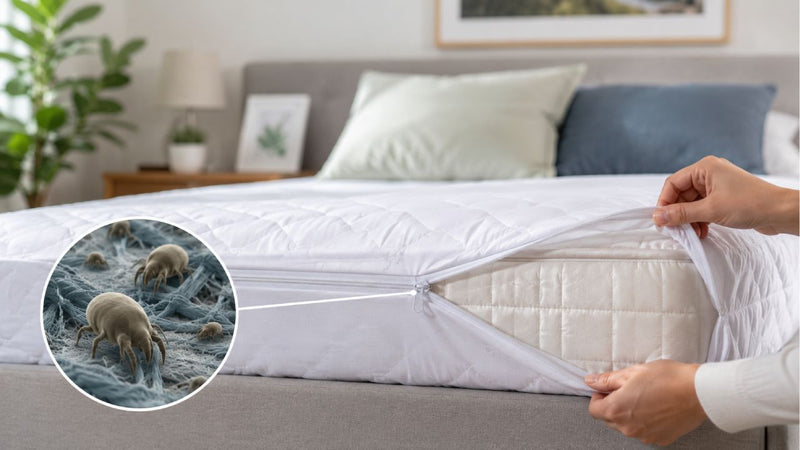
A mattress protector is a thin protective cover that is stretched directly over the mattress and keeps moisture, dust mites (HSM) and dirt away from the sleeping surface. It lies between the fitted sheet and the mattress and remains in place when changing the bed linen. A mattress protector differs from a mattress topper: the topper changes the firmness and serves for comfort, while the protector exclusively performs the protective function and does not add any noticeable height to the mattress.
Two designs are common on the market. The fitted cover with four corner elastic bands stretches over the mattress like a fitted sheet and can be changed in seconds. The all-round encasing with a zipper completely encloses the mattress on all six sides, offering the most comprehensive protection against mites and bed bugs. For daily use, a fitted cover is sufficient; for severe allergies or an acute bed bug infestation, the encasing provides better results.
Waterproof mattress protector: PU membrane, Molton or vinyl in comparison
A waterproof mattress protector with a PU membrane (polyurethane) offers the best combination of protection and sleeping comfort. The thin PU layer lies between two fabric layers, retains liquid 100 percent and remains air-permeable because its pores allow water vapor to pass through, but no drops. Molton mattress protectors are made of roughened cotton and absorb moisture without being waterproof themselves; they are suitable for people who sweat without incontinence needs and for those who prefer pure natural fibers. Vinyl or PVC-coated models offer the highest liquid protection and are often used in nursing care, but they rustle with every movement and trap heat, which leads to increased sweating.
For allergy sufferers, children and seniors with incontinence, a waterproof mattress protector with a PU membrane is the most sensible choice, as it stops moisture and remains breathable at the same time. For couples who primarily seek mite protection and do not need a liquid barrier, a Molton protector without a membrane is usually sufficient and costs less.
Cheap, thinly manufactured mattress protectors show three recurring weaknesses in tests. They rustle when turning over, disturbing light sleepers. They slip after a few nights without tight corner elastic bands. They often do not fit properly on high mattresses from 25 cm and come loose at the corners. A good model accommodates mattress heights up to 30 cm (12 inches) and remains quiet, even with frequent changes in sleeping position.
Choosing the right size: From 90x200 to 200x200 cm
The mattress protector size depends on the mattress, not the bed frame. The market covers the following standard sizes:
- Mattress protector 90x200 cm: Single beds and youth rooms.
- Mattress protector 100x200 cm: narrow single beds with a little more freedom of movement.
- Mattress protector 120x200 cm: Single sleepers with space requirements or small double beds.
- Mattress protector 140x200 cm: Couples or single sleepers who use a lot of space.
- Mattress protector 160x200 cm: classic double beds for two people.
- Mattress protector 180x200 cm: wide double beds, also with a child in the parents' bed.
- Mattress protector 200x200 cm: family beds and large box spring beds.
If you have a special size, measure the mattress in length, width, and height before buying, because a too-short protector will tear at the seams. Most models fit up to a mattress height of 30 cm (12 inches), beyond which an encasing with an extended sidewall is necessary. Box spring beds with toppers often reach a total height of 35 to 40 cm, so it is particularly worthwhile to measure beforehand.
Cotton, polyester or Molton: Which material is suitable?
A cotton mattress protector absorbs moisture, regulates temperature, and can be washed at 60 to 95 degrees Celsius (140 to 203 degrees Fahrenheit). Molton, a roughened cotton variant, further enhances this effect, feels soft, and does not crinkle. A polyester mattress protector dries faster, is more elastic, and cheaper to produce, but absorbs moisture less well than cotton and feels less comfortable in heat.
Models with Oeko-Tex Standard 100 certification are free of harmful substances such as formaldehyde and heavy metals, making them suitable for babies and allergy sufferers. For back problems or for bedridden individuals, a mattress protector with an additional cold foam overlay offers more pressure relief, but its ventilation is less than that of pure cotton. Three purchasing criteria are decisive in material selection: moisture absorption, washing temperature, and certification.
Mattress protectors against mites and bed bugs: When is an encasing worthwhile?
Yes, an encasing is worthwhile for house dust allergies, acute bed bug infestations, and for children's mattresses that frequently have direct skin contact. An encasing encloses the mattress with a tightly woven fabric and a zipper that completely prevents mites, bacteria, and bed bugs from accessing the mattress surface. Conventional fitted covers only cover the sleeping surface and leave the sides and bottom open, allowing mites to migrate over the edges.
An encasing traps heat slightly more than a simple fitted cover, but modern models with micro-perforation largely compensate for this effect. For pure liquid repellency without allergy problems, a waterproof fitted cover is sufficient; for complete mite protection, there is no way around an encasing.
IKEA and JYSK mattress protectors: What do the alternatives offer?
IKEA and JYSK offer simple mattress protectors and mattress covers in standard sizes such as 90x200 cm, 120x200 cm, and 160x200 cm. These models are usually made of cotton blend fabric, have corner elastic bands, and are washable at 60 degrees, thus covering the basic need for moisture and dirt protection.
A waterproof mattress protector with a full PU membrane is often missing from the standard range of both providers, which means that buyers with incontinence needs or children of diapering age have to resort to specialized manufacturers. Encasing models against mites and bed bugs are also less common in furniture stores than at specialized bedding providers. Those looking for full waterproofing with simultaneous breathability will find this combination more reliably with specialized bedding brands than in general furniture retail.
Mattress protectors for babies and children's beds
Yes, a waterproof mattress protector is part of the basic equipment of every cot, because children sweat more frequently and leak at night than adults in the first years of life. A children's mattress protector should meet three requirements: Oeko-Tex certification for freedom from harmful substances, a PU membrane for complete liquid protection and a washing temperature of at least 60 degrees Celsius (140 degrees Fahrenheit) for reliable hygiene.
Common children's sizes range from 60x120 cm for co-sleepers to 90x200 cm for first youth beds. Corner elastic bands with a high degree of elasticity keep the protector in position even with active children; a zippered encasing is also suitable for children with house dust allergies. When transitioning from a baby bed to a child's bed, it is worth re-measuring the new mattress, as many models only fit a single standard size.
Washing and caring for mattress protectors
A mattress protector needs care every 4 to 8 weeks, ideally during the regular bed linen change. Cotton and Molton models can be washed at 60 to 95 degrees Celsius (140 to 203 degrees Fahrenheit) in the washing machine, which reliably kills mites and bacteria. A mattress protector with a PU membrane should be washed at a maximum of 60 degrees without fabric softener and without a dryer; high heat makes the membrane porous and permanently reduces its waterproofness.
After washing, the protector should air dry or in a well-ventilated room. Moist protectors promote mold growth within a few days, so the mattress should also be aired for 2 to 3 hours before re-covering. An average mattress protector lasts 3 to 5 years, after which the protective effect of the membrane noticeably diminishes and fine cracks become visible.
Buying criteria: What to look for when buying a mattress protector?
Four criteria determine the quality of a mattress protector:
- Certification: An Oeko-Tex Standard 100 seal confirms freedom from harmful substances and is suitable for babies and allergy sufferers.
- Attachment: Corner elastic bands prevent slipping during sleep, a zippered encasing offers all-round protection.
- Mattress height: The manufacturer's specification for the maximum height must match your own mattress, usually up to 30 cm (12 inches).
- Washing temperature: 60 degrees is sufficient for everyday use, 95 degrees is recommended for allergies or incontinence.
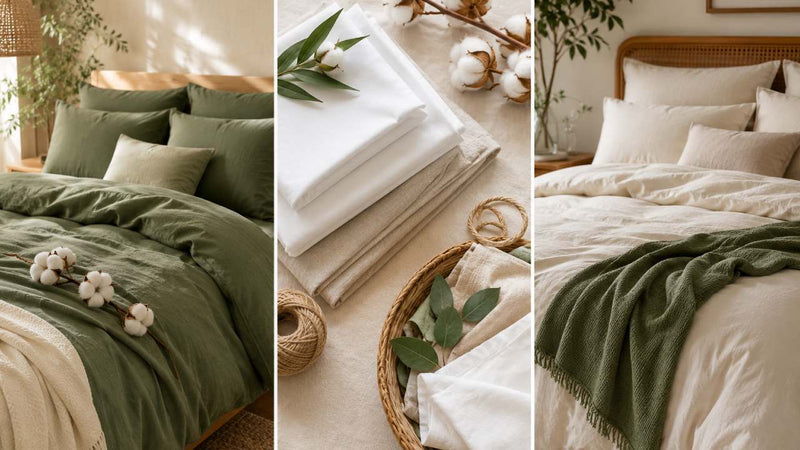
A high-quality mattress protector combines all four points and protects the mattress without reducing sleeping comfort. If you also want to improve the lying sensation, combine the protector with a suitable fitted sheet made of percale or sateen for a smooth, cooling sleeping sensation. Terrabeds offers fitted sheets in both materials to fit all standard sizes from 90x200 to 200x200 cm.
Common mistakes when buying a mattress protector
Three mistakes are most common when buying a mattress protector:
- Ordering the wrong size: A protector without first measuring the mattress height often does not fit over high box spring mattresses.
- Washing too hot: A mattress protector with a PU membrane loses its waterproofing at temperatures above 60 degrees Celsius (140 degrees Fahrenheit).
- Ignoring the certificate: A model without Oeko-Tex Standard 100 can contain harmful substances that cause irritation, especially in babies and allergy sufferers.
Anyone who checks these three points before buying avoids complaints and wrong purchases and finds the right mattress protector for their own mattress directly.
Conclusion: The right mattress protector for every sleep type
A mattress protector with a PU membrane is suitable for most households because it stops moisture and remains breathable at the same time. Allergy sufferers also opt for an encasing; heavy sweaters without incontinence needs can get by with a pure Molton protector. Families with small children should combine a PU membrane with tight corner elastic bands so that the protector stays in place even with nocturnal movement.
The right size between 90x200 and 200x200 cm, a washing temperature of at least 60 degrees Celsius (140 degrees Fahrenheit) and an Oeko-Tex Standard 100 certificate together ensure the best protection for the mattress. Anyone who checks these three criteria when buying reliably protects the mattress for several years and saves themselves from premature mattress purchases.
FAQ about mattress protectors
Is a mattress protector really worth it?
Yes, a mattress protector extends the life of the mattress by several years and keeps sweat, mites and stains away from the sleeping surface. Without protection, moisture soaks directly into the mattress core and can hardly be removed later.
Is a waterproof mattress protector also breathable?
Yes, models with a thin PU membrane are waterproof and at the same time air-permeable because their pores allow water vapor to pass through, but no liquid. Vinyl or PVC-coated variants also completely protect against liquid, but they trap heat and are less suitable for daily sleep.
What size mattress protector do I need?
The size of the mattress protector corresponds to the mattress size; common dimensions range from 90x200 cm for single beds to 200x200 cm for family beds. For custom sizes, only measuring the length, width, and height of your own mattress will help.
At what temperature do you wash a mattress protector?
Cotton and Molton protectors can withstand 60 to 95 degrees Celsius (140 to 203 degrees Fahrenheit), while models with a PU membrane should be washed at a maximum of 60 degrees without a dryer. Higher temperatures attack the waterproof coating and shorten its lifespan.
What is the difference between a mattress protector and a mattress pad?
A mattress protector protects the mattress from moisture and dirt and remains thin, while a mattress pad (topper) actively changes the lying feeling and adds several centimeters of height. If you only need protection, choose the protector; if you want to adjust the firmness, choose the topper.
Is cotton or polyester better for a mattress protector?
Cotton absorbs moisture better and regulates temperature more reliably, while polyester dries faster and costs less. For allergy sufferers and those who sweat, cotton or Molton is better; for quick everyday use, polyester is usually sufficient.
How long does a mattress protector last?
A mattress protector lasts 3 to 5 years with regular care, after which the protective effect of the waterproof membrane diminishes. Visible signs for replacement are cracks in the membrane, lingering odors and decreasing elasticity of the corner elastic bands.