A waterproof mattress protector is necessary if moisture regularly comes into contact with the mattress, such as with babies, people with incontinence, heavy sweaters, or those who often drink in bed. For everyone else, a normal protector is usually sufficient.
Mattresses cost between €200 and over €2,000. A single urine stain or prolonged sweat penetration can permanently damage the mattress, including mold. A waterproof mattress protector costs €15 to €60 and prevents exactly that.
This guide shows you: for whom protection is absolutely necessary, which materials really work, and what competing products conceal.
What is a waterproof mattress protector?
A waterproof mattress protector (WMP) consists of 2 layers: an absorbent surface made of cotton or microfiber and a waterproof backing made of polyurethane (PU) or TPU. The top layer absorbs moisture. The backing blocks its passage to the mattress.
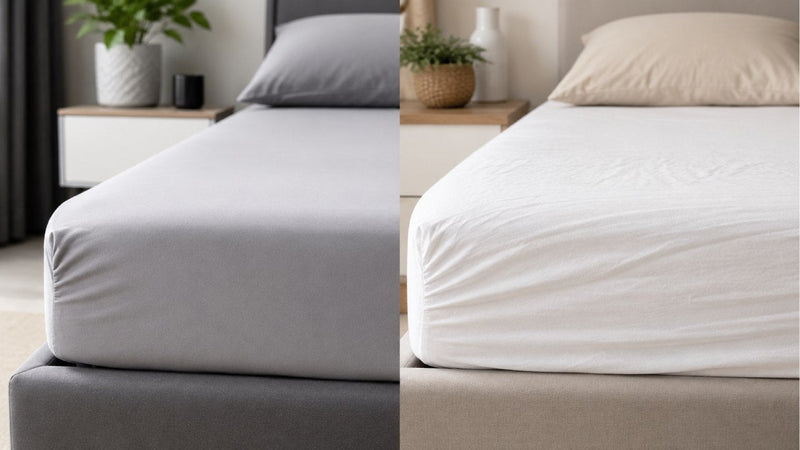
Normal mattress protector vs. waterproof mattress protector:
|
Feature |
Normal Protector |
Waterproof Protector |
|
Protection level |
Light moisture protection |
100% liquid barrier |
|
Material |
Cotton, polyester |
Cotton + PU/TPU film |
|
Breathability |
High |
Medium to high |
|
Care effort |
Normally washable |
Washable 40–60 °C |
|
Target group |
Adults without risk |
Babies, incontinence, heavy sweaters |
Who really needs a waterproof mattress protector?
5 groups of people benefit directly:
1. Babies and toddlers
Diapers don't always hold tight. Urine, spit-up, and milk hit the mattress daily. Every baby mattress needs a waterproof protector, without exception. Baby cot mattresses are smaller (60 × 120 cm or 70 × 140 cm), making them quick to change.
What to look for: Oeko-Tex Standard 100 certified, washable at 60 °C, no harmful substances in the textile.
2. People with incontinence
Incontinence affects over 10 million people in Germany. A waterproof protector with a TPU membrane is mandatory here, not optional. Models for incontinence are thicker (350–800 g/m²) and absorb larger quantities.
Important: choose models that can be washed at 90 °C – this is the only way to completely kill germs.
3. Heavy sweaters (hyperhidrosis)
Those who sweat 0.5–1 liter at night transfer this moisture directly into the mattress. Without protection, mold will develop in the mattress core within 6–12 months. A breathable waterproof protector wicks away sweat without causing heat buildup.
4. Allergy sufferers (dust mites)
Dust mites (Dermatophagoides pteronyssinus) live in hundreds of thousands in every mattress. A waterproof encasing protector (all-round cover) completely seals the mattress – this reduces mite exposure by up to 90% according to the German Allergy and Asthma Association (DAAB).
5. Persons in need of care
In care, a high-quality waterproof protector replaces expensive mattresses after every incident. Care mattresses with a waterproof cover cost 3–5 times more than standard mattresses with a separate protector. The protector is the more economical solution.
Materials compared: what is truly waterproof
Not every protector delivers on its promise. These 3 materials dominate the market:
· Inexpensive, reliably waterproof, but with poor workmanship it rustles and heats up.PU film (Polyurethane):
· Thinner, more breathable, no rustling – premium standard.TPU membrane (Thermoplastic Polyurethane):
· Cheapest option, not breathable, not recommended for adults.Vinyl/PVC:
TerraBeds recommends: TPU-coated protectors with a cotton surface for optimal protection without sacrificing comfort. More about our products at terrabeds.com.
What competing products don't say: 4 common mistakes
Mistake 1: Breathability misjudged.
Many articles praise waterproof protectors as "completely breathable" – this is misleading. PU-coated protectors reduce air permeability by 40–60% compared to uncoated models. TPU protectors are better, but no substitute for an open-pore fabric.
Mistake 2: Washing temperature ignored.
Only 60 °C and above completely kill mites and bacteria. Many inexpensive protectors only withstand 40 °C, meaning hygiene remains incomplete.
Mistake 3: No size indication for mattress thickness.
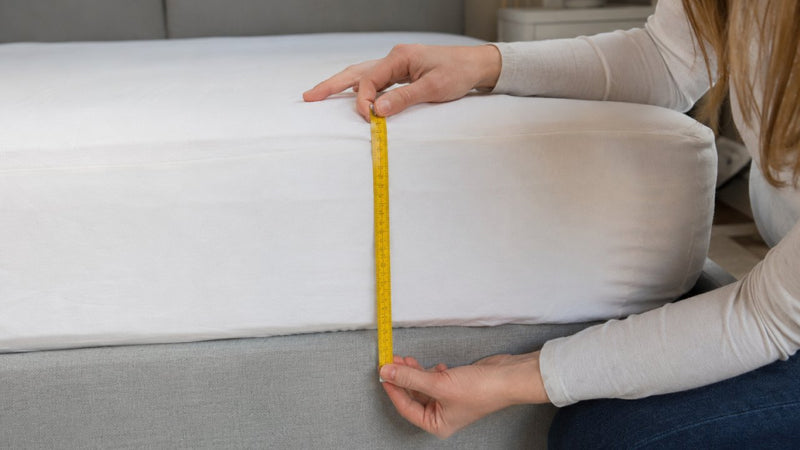
Protectors with less than 20 cm insertion depth will immediately slip on modern mattresses (18–30 cm). At least 25 cm insertion depth is standard for contemporary mattresses.
Mistake 4: Certification left unclear.
Oeko-Tex Standard 100 is the minimum requirement. Without this certificate, no product recommendation, especially for babies and allergy sufferers.
Washing and caring for your protector correctly
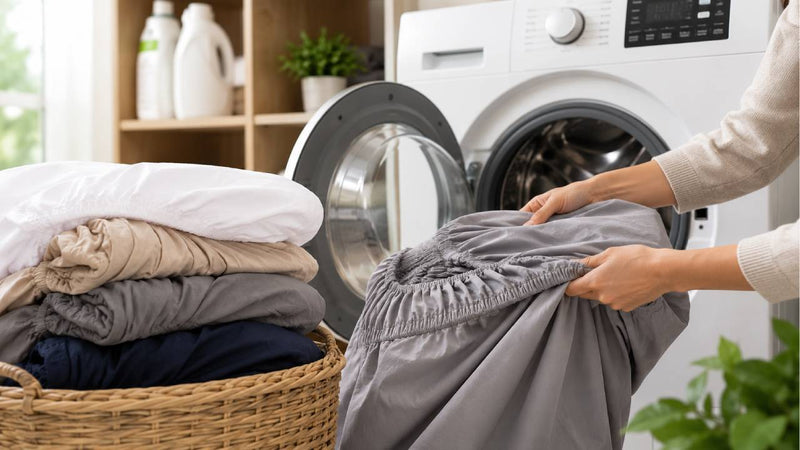
A waterproof protector loses its protective function if washed incorrectly. These 5 care rules are crucial:
- 40–60 °C depending on the manufacturer. Never hotter than specified, otherwise the PU/TPU layer will detach.Washing temperature:
- No spinning over 800 rpm protects the waterproof layer.Gentle cycle:
- Only on low heat or avoid completely – heat destroys the PU coating.Tumble dryer:
- Never. Direct heat makes the film porous.Ironing:
- Wash at least every 4 weeks; for incontinence and babies, after every incident.Frequency:
Buying a protector: 6 crucial criteria
· Oeko-Tex Standard 100 or GOTS certified – pollutant-free textiles.Certification:
· At least 25 cm for current mattress thicknesses between 18 and 30 cm.Insertion depth:
· TPU membrane > PU film > Vinyl. TPU is breathable and quiet.Water resistance:
· 60 °C for hygiene with incontinence and babies, 40 °C for normal use.Washability:
· Precisely adapt to mattress size: 90×200, 140×200, 160×200, 180×200 cm.Size:
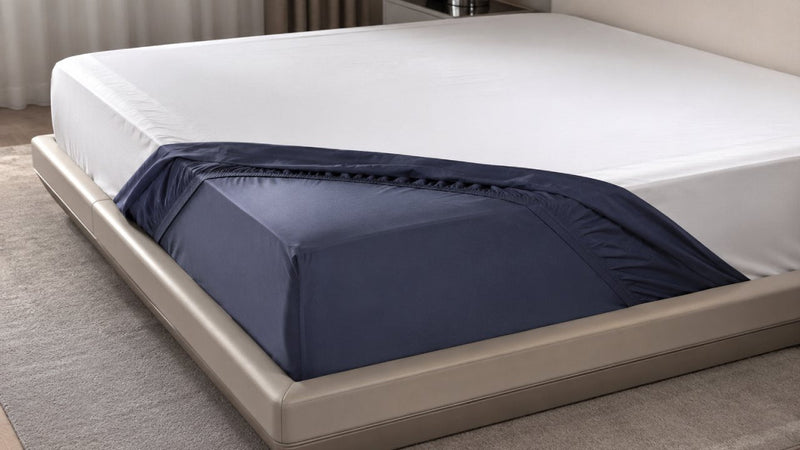
· Elastic band on all 4 corners, not just on 2 corners like with cheap models.Non-slip property:
You can find the right mattress for your new protector directly at TerraBeds Matratzen online kaufen. All common sizes are available there.
When is a waterproof protector not needed?
Nein, nicht jeder braucht einen wasserdichten Matratzenschoner. Wer nachts wenig schwitzt, kein Baby im Bett hat und keine Inkontinenz-Probleme kennt, fährt mit einem normalen atmungsaktiven Schoner besser.
Ein normaler Schoner reicht aus, wenn:
· Du weniger als 200 ml pro Nacht schwitzt (Normalwert für Erwachsene).
· Kein Kind unter 5 Jahren im Bett schläft.
· Keine Inkontinenz oder Pflegebedürftigkeit vorliegt.
· Du keine starke Hausstaubmilbenallergie hast.
In diesem Fall bietet ein hochwertiger Baumwoll-Schoner ohne Wasserschicht mehr Atmungsaktivität und Schlafkomfort.
Häufig gestellte Fragen (FAQ)
1. Was ist der Unterschied zwischen Matratzenschoner und Matratzenauflage?
Ein Matratzenschoner schützt die Matratze vor Verschmutzung und Feuchtigkeit. Eine Matratzenauflage (Topper) verbessert zusätzlich das Liegegefühl. Schoner sind dünner (0,3–2 cm), Topper dicker (4–10 cm).
2. Ist ein wasserdichter Matratzenschoner für Erwachsene sinnvoll?
Ja, für Erwachsene mit starkem Schwitzen, Inkontinenz oder Allergien ist er sinnvoll. Für alle anderen ist ein normaler Schoner ausreichend.
3. Wie oft soll man einen Matratzenschoner waschen?
Alle 4 Wochen bei normalem Gebrauch. Bei Inkontinenz und Babys nach jedem Vorfall. Bei Allergien wöchentlich.
4. Welche Größe passt für meine Matratze?
Die Größe des Schoners muss exakt der Matratzengröße entsprechen: 90×200 cm, 140×200 cm, 160×200 cm oder 180×200 cm. Auf die Einschubtiefe (mindestens 25 cm) achten.
5. Kann man einen wasserdichten Matratzenschoner in den Trockner geben?
Nur auf niedrigster Trockner-Stufe oder gar nicht. Hohe Temperaturen zerstören die PU/TPU-Wasserschutzschicht dauerhaft.
6. Sind wasserdichte Schoner atmungsaktiv?
TPU-beschichtete Schoner sind atmungsaktiv, aber weniger als unbeschichtete Modelle. PU-Folie reduziert die Atmungsaktivität stärker als TPU – bei starkem Schwitzen also TPU bevorzugen.
7. Welche Zertifizierung sollte ein Matratzenschoner haben?
Mindestens Öko-Tex Standard 100. Für Babys und Allergiker ist zusätzlich GOTS (Global Organic Textile Standard) empfehlenswert.
8. Kann ein wasserdichter Schoner bei Allergien helfen?
Ja, ein Encasing-Schoner (Rundumbezug) reduziert Hausstaubmilben um bis zu 90 %. Er umschließt die Matratze komplett und lässt Milben keine Chance, sich in der Matratze zu vermehren.
9. Was ist besser: PU-Folie oder TPU-Membran?
TPU-Membran ist besser. TPU ist dünner, atmungsaktiver, geräuschloser und langlebiger als PU-Folie. PU-Folie ist günstiger, kann aber rascheln und heizt stärker auf.
10. Schützt ein wasserdichter Schoner auch vor Bettwanzen?
Ein normaler wasserdichter Schoner schützt nicht vor Bettwanzen. Spezielle Anti-Allergen-Encasings mit engmaschigem Gewebe (Porengröße < 0,1 mm) halten Bettwanzen fern. Diese sind teurer, aber effektiv.
Fazit: Wann lohnt sich der wasserdichte Schutz wirklich?
Ein wasserdichter Matratzenschoner lohnt sich für Babys, Inkontinenz-Betroffene, starke Schwitzer und Allergiker – das sind die 4 klaren Fälle. Alle anderen fahren mit einem normalen Schoner komfortabler.
Wer kaufen will: TPU-Membran mit Baumwolloberfläche, Öko-Tex-zertifiziert, 25+ cm Einschubtiefe, waschbar bei 60 °C – das sind die 5 Merkmale eines guten wasserdichten Schoners.
Für die passende Matratze besuche TerraBeds Schlafkomfort neu entdecken. Dort findest du Matratzen in allen gängigen Größen, die perfekt mit einem wasserdichten Schoner kombinierbar sind.