How often should you change your bed linen? The answer: every 1 to 2 weeks, but that's just the starting point. If you sweat a lot, have allergies, or let pets sleep in your bed, you should change it more often. We spend around 7 to 9 hours per night in bed. During this time, sweat, skin flakes, body fat, mites and bacteria accumulate in the bed linen. This is not an alarm signal but a good reason to change it regularly.
According to a German study, many people only change their bed linen every 4 to 6 weeks, which is too infrequent. This guide explains what rhythm really makes sense and what makes the difference.
The basic rule: Change bed linen every 1 to 2 weeks
For healthy adults, the rule is: change bed linen every 1 to 2 weeks. The exact rhythm depends on personal factors - more on this below. However, waiting longer than 2 weeks risks a significant accumulation of microorganisms, sweat, and skin oil in the bed linen.
Specifically, the following happens in your bed linen every night:
- On average, we release up to 200 ml of sweat
- We lose around 30,000 to 40,000 dead skin cells daily
- Body fats and oils penetrate directly into the cover fabric
- Dust mites feed on skin flakes and multiply in bed
- Fungal spores and bacteria find ideal conditions in moist warmth
After 2 weeks, enough has accumulated that a change becomes hygienically necessary, not just a feeling.
When you should change your bed linen more often
Certain situations make a shorter change rhythm advisable. Here are 6 specific cases:
1. Heavy night sweating
If you sweat heavily at night, whether due to exercise, heat, hormones, or illness, you should change your bedding weekly. If you sweat very heavily, even every 3 to 4 days. Moisture in the fabric is the main trigger for mite and mold growth. Breathable bedding made of cotton satin or linen helps to regulate the sleeping temperature and keep the changing frequency moderate.
2. Allergy sufferers and dust mites
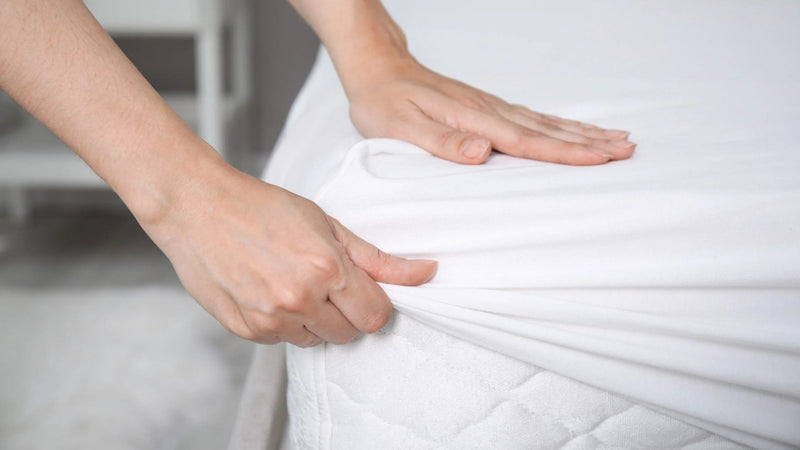
People with dust mite allergies or asthma should change their bed linen once a week and wash it at a minimum of 60 °C. Important: Mites themselves primarily live in the mattress, so simply changing the bed linen is not enough. In addition, a mattress protector with mite protection and vacuuming the mattress with each change is recommended.
3. Illness and colds
After a cold, flu, or other infectious diseases: change immediately as soon as the acute phase is over. Bacteria and viruses can survive on fabrics for several hours to days. In case of contagious diseases: change bed linen daily or every other day to avoid re-infection.
4. Pets in bed
Dogs and cats bring external germs, fur, mites, and pollen into the bed. If you allow pets in the sleeping area, you should change the bed linen every 5 to 7 days, regardless of other factors.
5. Sleeping naked
If you sleep naked, you have direct skin contact with the fabric, so significantly more sweat and body fat get into the fibers. A weekly rhythm is recommended here.
6. Summer and high temperatures
In summer, at temperatures above 25 °C, you sweat more even with light summer bedding. Weekly changing is then the better choice. Linen or fine cotton stays cooler and dries faster, which reduces germ load.
Overview: How often to change bed linen by sleep type
|
Sleep Type |
Recommended Rhythm |
Washing Temperature |
|
Normal Sleeper |
Every 1–2 Weeks |
40–60 °C |
|
Heavy Sweating |
Every 5–7 Days |
60 °C |
|
Allergy Sufferers (Dust Mite Allergy) |
Weekly |
60 °C or higher |
|
Illness (Cold/Flu) |
Immediately after recovery |
60 °C |
|
Pets in Bed |
Every 5–7 Days |
60 °C |
|
Sleeping Naked |
Weekly |
40–60 °C |
|
Summer / Heat |
Weekly |
40–60 °C |
|
Children under 3 years |
2x per week |
60 °C |
Changing bed linen: What many forget
Simply changing the duvet cover is not enough. 4 items should be changed regularly:
- Duvet cover: every 1–2 weeks
- Pillowcase: every 1–2 weeks – pillowcases collect a lot of facial oil and make-up residue
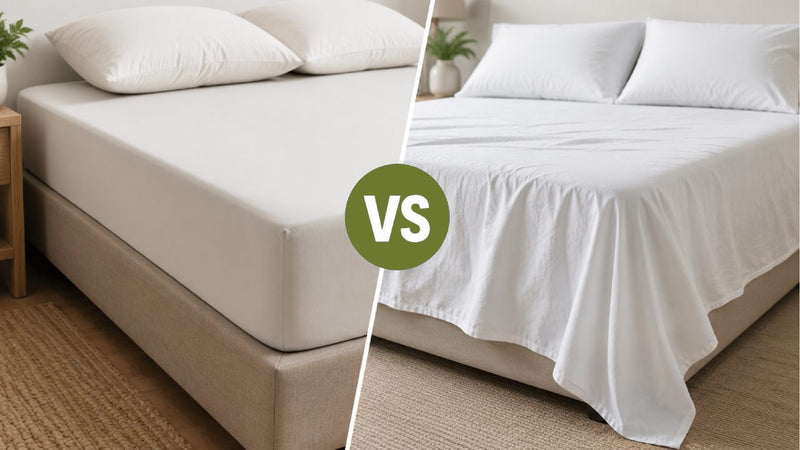
- Fitted sheet / bedsheet: every 1–2 weeks
- Duvet itself: wash every 2 to 3 months, don't just air it
- 40 °C: Sufficient for normal use without allergies or illness
- 60 °C: Reliably kills dust mites – recommended for allergy sufferers
- 90 °C: Only for heavy germ contamination (after illness, for baby bedding) – not gentle on fabrics
- Mite proliferation: House dust mites reach critical concentrations in 6–8 week old bedding
- Skin problems: Bacteria and fungi can promote skin irritations, pimples, or fungal infections
- Allergy exacerbation: Mite droppings are the most common house dust allergen; they accumulate directly on the bed linen
- Disturbed sleep: Unpleasant odors and heat buildup measurably reduce sleep quality
- Buy a second set: With 2 sets, a clean set is always available, no stress when changing
- Choose a fixed day of the week: If you change on Mondays or Fridays, you are less likely to forget
- Change pillowcases more often: Keep it simple - pillowcase every 4–5 days, rest every 1–2 weeks
- Air the bed after getting up: Fold back the duvet for 15 to 20 minutes to allow moisture to escape
- Choose quality: High-quality bed linen made of pure cotton or linen is more breathable, dries faster, and lasts longer than cheap blended fabrics
Pillowcases in particular are often underestimated. The face rests directly on them every night, and skin oil, hair, creams, and saliva residues quickly accumulate. For impure skin or acne: change pillowcases every 3 to 4 days.
Correct washing: These temperatures apply to bed linen
The washing temperature determines the hygienic effect:
Important: Mites only reliably die at 55–60 °C. If you wash at 40 °C and suffer from a dust mite allergy, you are only partially solving the problem. Alternatively, special mite control agents for low washing temperatures are available in pharmacies.
After washing: let bed linen dry completely before putting it back on the bed. Moisture in the fabric promotes mold growth, especially in poorly ventilated bedrooms.
How often to clean mattress, pillows and duvet?
In addition to the bed linen itself, the interior of the bed should also be cleaned regularly:
Cleaning the mattress
Vacuum mattresses thoroughly every 3 months, both sides. At the same time, flip the mattress if it is suitable for this. For house dust allergy: use mattress encasings (mite-proof covers). A mattress usually lasts 8 to 10 years. After that, the sleep quality suffers, as even the best encasing cannot compensate for material fatigue.
Washing pillows
Wash synthetic pillows every 3 months, down pillows every 6 months. Replace pillows every 2 to 3 years. They lose their support and, even with regular cover changes, collect mites and skin flakes inside.
Washing duvets
Wash duvets 2 to 3 times a year, more often in summer. In winter, it is sufficient to air the duvet every 3 months and wash it once a year, provided you sleep in pajamas.
How often to change pajamas?
Pajamas are often forgotten, but they have direct skin contact and absorb sweat. If you wear pajamas, you should change them every 2 to 3 nights. This is especially true in summer or when ill. Fresh pajamas also slightly extend the change interval of the bed linen, as the fabric acts as a protective layer.
What happens if you change bed linen too infrequently?
Infrequent changing has 4 concrete consequences:
Infrequent changing is not an immediate health risk for healthy adults without allergies. However, over weeks, it accumulates into a burden that affects sleep quality and well-being.
5 practical tips for changing bed linen
You can find more information on choosing the right bed linen in our mattress and sleep guide on terrabeds.de.
Frequently Asked Questions (FAQ)
How often should you change your bed linen?
Every 1 to 2 weeks - this is the general recommendation for healthy adults. For allergies, heavy sweating, or pets in bed: weekly or more often.
How often to change bed linen in summer?
Weekly in summer. Higher temperatures lead to more sweating, which causes the germ load to increase more quickly. Light cotton or linen bedding absorbs moisture better and stays fresh longer.
Is it enough to change bed linen every 3 months?
No, every 3 months is too infrequent for hygiene. After 2 to 3 weeks at the latest, sweat, mites, and bacteria have accumulated sufficiently to necessitate a change.
How often to change bedding for a person who sweats a lot?
Weekly, or every 3 to 5 days for heavy sweating. Night sweats can indicate various causes; if you sweat heavily regularly, it's worth consulting a doctor.
How often to change mattress?
Every 8 to 10 years, which is the average lifespan of a good mattress. Before that, it is recommended to turn it every 3 to 6 months and vacuum it regularly. Mattress encasings extend the hygienic lifespan.
How often to change pajamas?
Every 2 to 3 nights. If you sweat a lot or are ill, you should change them daily. Pajamas reduce the direct transfer of germs to the bed linen and slightly extend its changing interval.
What happens if you never wash your bed linen?
House dust mites, fungi, and bacteria multiply uncontrollably. In the long term, this leads to poorer sleep quality, skin problems, and, for those prone to allergies, increased symptoms. If you have rarely changed your bedding so far, you should also wash it at 60 °C to eliminate a high germ load.