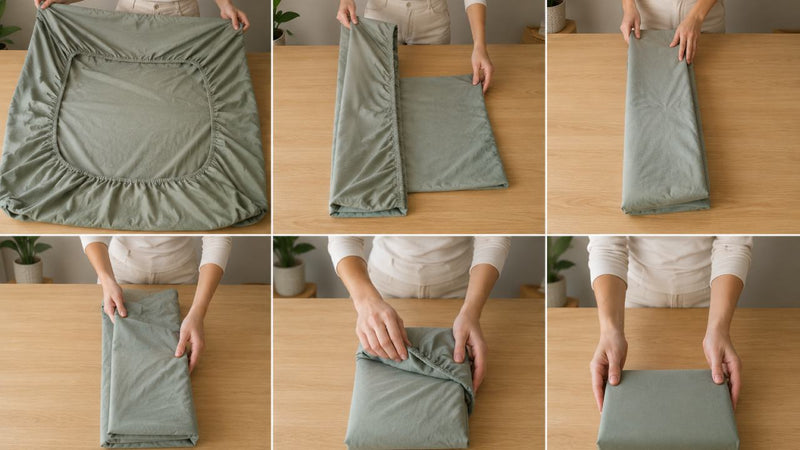
Wasche dein Mikrofaser Spannbettlaken bei 30 bis 40 °C mit mildem Flüssigwaschmittel, ohne Weichspüler, und trockne es an der Luft oder im Schonprogramm. Diese Kombination erhält die Weichheit und verhindert, dass die feinen Kunstfasern nach wenigen Wäschen rau und pelzig werden. Viele Kaufratgeber nennen unterschiedliche Werte zwischen 30 und 60 °C, deshalb zeigt dir dieser Ratgeber 2026, welche Temperatur wirklich sicher ist und wie du Gummizug, Farbe und Griff deines Spannbettlakens über Jahre erhältst.
Bei welcher Temperatur wäschst du Mikrofaser Spannbettlaken?
Die sichere Standardtemperatur für Mikrofaser Spannbettlaken liegt bei 30 bis 40 °C, weil die synthetischen Fasern aus Polyester oder Polyamid (PA) bei höherer Hitze weich werden und ihre Form verlieren können. Manche hochwertigen Mikrofaser-Gewebe mit spezieller Ausrüstung vertragen auch 60 °C, das steht dann aber ausdrücklich auf dem Pflegeetikett. Prüfe deshalb immer zuerst das Etikett, statt dich auf eine pauschale Zahl aus dem Internet zu verlassen. Wäschst du regelmäßig bei 60 °C, ohne dass der Hersteller das freigibt, riskierst du Verformungen, Glanzstellen und einen dauerhaft raueren Griff.
Der Unterschied zwischen 30 und 40 °C spielt bei den meisten Alltagsflecken kaum eine Rolle, weil beide Temperaturen ausreichend Schmutz und Hautschuppen entfernen. Erst ab 60 °C beginnt die spürbare Keimreduktion, die bei Baumwolle unproblematisch ist, bei unbeschichteter Mikrofaser aber genau die Fasern angreift, die für die Weichheit verantwortlich sind.
Mikrofaser Spannbettlaken waschen: Schritt für Schritt
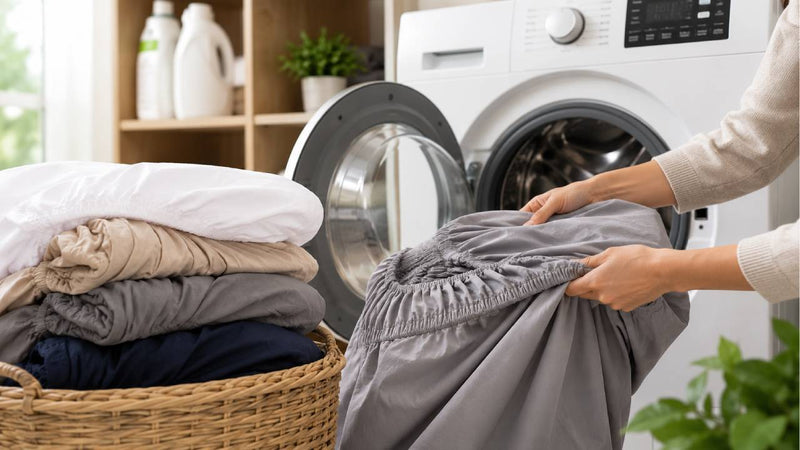
Um dein Mikrofaser Spannbettlaken richtig zu waschen, reichen 5 einfache Schritte:
- Etikett prüfen: Lies die zulässige Temperatur und das Schleudersymbol, bevor du das Programm wählst.
- Getrennt waschen: Wasche Mikrofaser separat von Frottee, Handtüchern oder anderen fusselnden Stoffen.
- Schonwaschgang wählen: Nutze ein Programm für empfindliche Textilien bei 30 bis 40 °C.
- Mildes Waschmittel dosieren: Verwende ein Flüssigwaschmittel ohne Bleiche und ohne Weichspüler-Zusatz.
- Maschine nicht überladen: Lass genug Platz in der Trommel, damit sich das Gewebe nicht an sich selbst reibt.
Diese Reihenfolge schont sowohl das Gewebe als auch den elastischen Rand des Spannbettlakens.
Übersicht: Die richtige Pflege für Mikrofaser Spannbettlaken
Diese Tabelle fasst die wichtigsten Pflegeschritte für Mikrofaser Spannbettlaken zusammen:
|
Pflegeschritt |
Empfehlung |
Warum |
|
Waschtemperatur |
30 bis 40 °C, Etikett beachten |
Hitze verformt Kunstfasern |
|
Waschmittel |
Mildes Flüssigwaschmittel |
Kein Bleichmittel, keine Rückstände |
|
Weichspüler |
Vermeiden |
Verklebt Fasern, senkt Saugkraft |
|
Schleuderzahl |
Max. 800 bis 1.000 U/min |
Schont Gummizug und Naht |
|
Trocknen |
Lufttrocknen oder Schonprogramm |
Hohe Hitze schmilzt Fasern |
|
Bügeln |
Meist nicht nötig, sonst niedrige Stufe |
Zu heißes Bügeleisen glänzt die Faser |
Welches Waschmittel eignet sich für Mikrofaser?
Ein mildes Flüssigwaschmittel ohne Bleichmittel und ohne optische Aufheller eignet sich am besten für Mikrofaser Spannbettlaken. Bleichmittel und aggressive Enzyme greifen die Kunstfaser an und lassen die Farben schneller verblassen als bei Naturfasern. Verzichte außerdem auf Vollwaschmittel mit hohem Bleichanteil für dunkle oder bunte Spannbettlaken, weil die enthaltenen Aufheller auf synthetischen Fasern stärker wirken als auf Baumwolle.
Dosiere das Waschmittel nach der niedrigsten Empfehlung auf der Verpackung, weil überdosiertes Waschmittel in den feinen Mikrofasern hängen bleibt und dort einen leicht klebrigen Film hinterlässt. Duftperlen oder Waschmittelzusätze mit Öl-Anteil solltest du bei Mikrofaser ebenfalls meiden, weil Öle die Fasern verkleben und die Fleckenresistenz des Gewebes schwächen.
Warum Weichspüler die Faser schädigt
Weichspüler legt sich als Film auf die feinen Mikrofasern und verklebt die winzigen Zwischenräume, die für die Saugkraft des Gewebes verantwortlich sind. Nach mehreren Wäschen mit Weichspüler nimmt ein Mikrofaser Spannbettlaken spürbar weniger Feuchtigkeit auf und fühlt sich trotzdem weniger weich an, obwohl genau das Gegenteil beabsichtigt war. Ersetze Weichspüler durch einen Schuss weißen Essig im Weichspülerfach, wenn du zusätzliche Geschmeidigkeit willst, ohne die Faser zu verkleben.
Gummizug richtig pflegen: Der empfindlichste Teil eines Spannbettlakens
Der Gummizug am Rand eines Spannbettlakens verschleißt schneller als die Fläche, wenn du ihn hohen Schleuderzahlen oder ständiger Überdehnung aussetzt. Begrenze die Schleuderzahl auf 800 bis 1.000 U/min und zieh das Laken beim Beziehen nicht stärker, als für einen glatten Sitz nötig ist. Wasche das Laken zusätzlich auf links, wenn du die Naht am Gummizug vor direkter Reibung mit anderer Wäsche schützen willst. Ein ausgeleierter Gummizug lässt sich nicht reparieren, deshalb entscheidet die Pflege hier über die gesamte Lebensdauer des Lakens.
Prüfe den Gummizug alle paar Monate, indem du kurz an einer Ecke ziehst und loslässt. Federt der Stoff sofort zurück, ist die Elastizität noch intakt, bleibt dagegen eine sichtbare Delle zurück, lässt die Spannkraft nach und das Laken wird bald an den Ecken hochrutschen.
Mikrofaser Spannbettlaken trocknen: Lufttrocknen oder Trockner?
Lufttrocknen an einem gut belüfteten Ort schont Mikrofaser Spannbettlaken am meisten, weil keine Hitze auf die Kunstfaser einwirkt. Nutzt du den Trockner, wähle das Schonprogramm mit niedriger Temperatur, sonst können sich die Fasern verformen oder leicht verkleben. Vermeide direkte Sonneneinstrahlung beim Lufttrocknen, wenn dein Spannbettlaken kräftige Farben hat, weil UV-Licht synthetische Farbstoffe schneller ausbleicht als Naturfarbstoffe auf Baumwolle.
Bügeln: Ist es bei Mikrofaser überhaupt nötig?
Mikrofaser Spannbettlaken brauchst du in den meisten Fällen nicht zu bügeln, weil das Gewebe kaum knittert. Willst du trotzdem bügeln, stelle das Bügeleisen auf niedrige Temperatur und bügle von der Innenseite, um Glanzstellen auf der Außenseite zu vermeiden.
Flecken entfernen: So bleibt Mikrofaser schmutzresistent
Behandle Flecken auf Mikrofaser Spannbettlaken sofort mit kaltem Wasser, bevor du das Laken in die Maschine gibst, weil warmes Wasser Eiweißflecken wie Blut oder Schweiß in den Fasern fixiert. Trage bei Fett- oder Ölflecken etwas Spülmittel direkt auf die Stelle auf und lass es 10 bis 15 Minuten einwirken, bevor du normal wäschst. Reibe Flecken nicht kräftig ein, weil das die glatte Oberfläche der Mikrofaser aufraut und die Fleckenresistenz auf Dauer verringert.
Bei Make-up- oder Hautcremeresten hilft ein Klecks mildes Geschirrspülmittel besser als spezielle Fleckensprays, weil Letztere oft optische Aufheller enthalten. Tupfe den Fleck von außen nach innen ab, statt ihn kreisförmig zu verreiben, damit er sich nicht weiter im Gewebe verteilt.
Pilling vermeiden: Warum Mikrofaser nach einigen Wäschen rau wird
Pilling entsteht, wenn feine Mikrofasern durch Reibung mit rauen Stoffen oder zu hoher Schleuderzahl aneinander reiben und sich zu kleinen Knötchen verdrehen. Wasche Mikrofaser deshalb getrennt von Frottee, Reißverschlüssen oder Klettverschlüssen, die die Oberfläche zusätzlich aufrauen. Ein niedrigeres Schleuderprogramm und eine nicht überladene Trommel reduzieren die Reibung spürbar und verlängern die Zeit bis zur ersten sichtbaren Pilling-Bildung.
Fülle die Waschmaschine höchstens zur Hälfte, wenn du ein Mikrofaser Spannbettlaken wäschst, damit genug Wasser zwischen den Fasern zirkulieren kann. Eine überladene Trommel presst das Gewebe stärker zusammen, wodurch die Fasern öfter aneinander reiben und schneller verfilzen.
Wasserhärte und Waschmaschine: Oft übersehene Einflussfaktoren
Hartes Wasser hinterlässt Kalkrückstände auf Mikrofaser, die sich wie ein feiner Film anfühlen und die Weichheit nach einigen Wäschen reduzieren. Gib in Regionen mit hartem Wasser eine kleine Menge Enthärter oder Zitronensäure ins Waschmittelfach, damit die Fasern rückstandsfrei bleiben. Reinige zusätzlich das Flusensieb und die Gummidichtung deiner Waschmaschine regelmäßig, weil sich dort Fetträckstände sammeln, die sich beim nächsten Waschgang auf helle Mikrofaser-Spannbettlaken übertragen können.
Aufbewahrung zwischen den Wäschen
Bewahre gewaschene Mikrofaser Spannbettlaken trocken und luftig auf, am besten gefaltet in einem Baumwollbeutel statt in Plastik. Plastikverpackungen stauen Restfeuchtigkeit und begünstigen Gerüche, während atmungsaktive Stoffbeutel das Gewebe frisch halten.
Passform und Material zusammen wählen
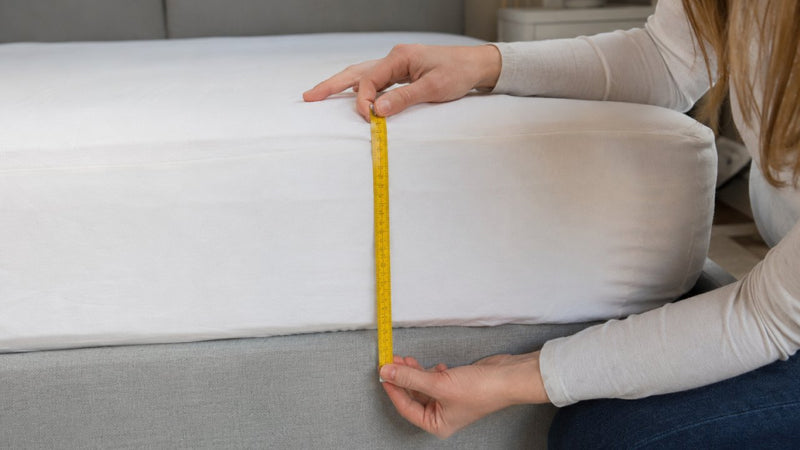
Die richtige Pflege ergibt nur zusammen mit der passenden Größe und Steghöhe deiner Matratze wirklich Sinn. Unser Jersey Spannbettlaken Sortiment zeigt Material und Pflegehinweise direkt in der Produktbeschreibung, damit du Waschtemperatur und Passform in einem Schritt prüfen kannst. Für Allergiker und Umweltbewusste eignet sich unsere Bettwäsche aus Bio-Baumwolle als pflegeleichte Alternative zu Mikrofaser. Weitere unabhängige Informationen zu Textilsiegeln liefert OEKO-TEX, etwa zu schadstoffgeprüften Materialien in Bettwäsche.
Mikrofaser Spannbettlaken im Sommer und Winter richtig behandeln
Im Sommer schwitzt du mehr, deshalb solltest du dein Mikrofaser Spannbettlaken dann alle 5 bis 7 Tage wechseln statt alle 2 Wochen. Im Winter reicht ein Wechsel alle 10 bis 14 Tage meist aus, weil weniger Schweiß und Hautfett in die Fasern gelangen. Lüfte das Bett nach dem Aufstehen mindestens 15 Minuten, unabhängig von der Jahreszeit, damit Feuchtigkeit aus der Matratze entweichen kann, bevor du neu beziehst.
Checkliste: 6 Fehler, die Mikrofaser Spannbettlaken ruinieren
- Waschen bei über 40 °C ohne Freigabe des Herstellers.
- Verwenden von Weichspüler bei jeder Wäsche.
- Trocknen im Hochtemperatur-Programm des Trockners.
- Waschen zusammen mit Frottee-Handtüchern oder Reißverschlüssen.
- Überladen der Waschmaschine über die empfohlene Füllmenge hinaus.
- Kräftiges Einreiben frischer Flecken statt sanftem Vorbehandeln.
Fazit: Mikrofaser Spannbettlaken waschen ohne Qualitätsverlust
Mikrofaser Spannbettlaken waschen gelingt langfristig faltenfrei und weich, wenn du bei 30 bis 40 °C wäschst, auf Weichspüler verzichtest, die Schleuderzahl begrenzt und schonend trocknest. Diese 4 Regeln entscheiden über Jahre Nutzungsdauer statt einiger Monate.
Häufige Fragen zum Waschen von Mikrofaser Spannbettlaken
Kann man Mikrofaser Spannbettlaken bei 60 Grad waschen?
Ja, aber nur wenn das Pflegeetikett diese Temperatur ausdrücklich freigibt. Ohne diese Freigabe riskierst du bei 60 °C Verformungen, Glanzstellen und einen dauerhaft raueren Griff des Gewebes.
Darf man Weichspüler für Mikrofaser Spannbettlaken verwenden?
Nein. Weichspüler verklebt die feinen Fasern, senkt die Saugkraft und macht das Gewebe langfristig weniger atmungsaktiv statt weicher, auch wenn der erste Eindruck nach dem Waschen anders wirkt.
Wie oft sollte man ein Mikrofaser Spannbettlaken waschen?
Wechsle und wasche dein Spannbettlaken alle 1 bis 2 Wochen, bei starkem Schwitzen oder Allergien mindestens wöchentlich.
Muss man Mikrofaser Spannbettlaken bügeln?
Nein, meistens nicht. Mikrofaser knittert kaum, ein Bügeln bei niedriger Temperatur von der Innenseite ist nur bei sichtbaren Falten nötig.
Warum wird Mikrofaser nach dem Waschen rau?
Mikrofaser wird meist durch zu hohe Waschtemperaturen, Weichspüler oder Reibung mit rauen Stoffen wie Frottee rau, weil diese Faktoren die glatte Faserstruktur aufrauen.
Kann man Mikrofaser im Trockner trocknen?
Ja, im Schonprogramm bei niedriger Temperatur. Hochtemperatur-Programme können die synthetischen Fasern verformen oder zum Schmelzen bringen.
Gibt Mikrofaser beim Waschen Mikroplastik ab?
Ja. Mikrofaser besteht aus Polyester oder Polyamid und gibt bei jeder Wäsche kleinste Kunststofffasern ins Abwasser ab, ein Waschmaschinenfilter reduziert diesen Effekt nur teilweise.