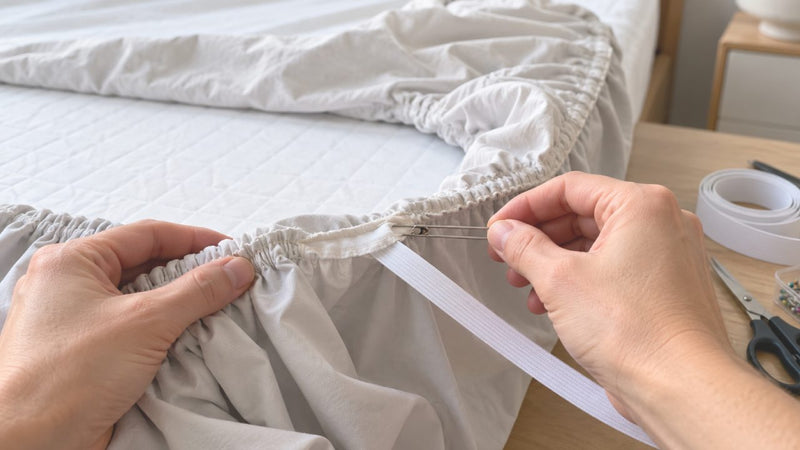
Caring for sateen bed linen is best done with a delicate detergent on a gentle cycle, a spin speed of no more than 600 to 900 revolutions per minute (rpm), and a washing temperature that depends on the fibre material: cotton sateen (Mako-sateen) tolerates 40 to 60 °C, synthetic fibre sateen made of polyester or polyamide a maximum of 30 to 40 °C, and silk sateen should be hand-washed at a maximum of 30 °C. Sateen is not a fibre, but a weave in satin weave: the warp thread floats over several weft threads before re-entering, which makes the surface shiny, while the reverse side remains matt. It is precisely this long exposed thread structure that makes sateen more sensitive to heat, strong spinning and aggressive detergents than densely woven fabrics such as percale. This guide explains every step of caring for sateen bed linen: temperature, detergent, spin speed, drying, ironing, stain removal, pilling prevention and storage.
What is sateen and why does the fabric need special care?
Sateen is created by satin weave, a weaving method in which the warp thread skips two to four weft threads before running underneath once. This construction creates long, exposed thread sections that reflect light and produce the characteristic sheen. Renforcé and percale, on the other hand, use plain weave, in which warp and weft alternately cross each thread, resulting in a matt but more robust fabric. Sateen can consist of cotton (Mako-sateen), polyester, polyamide or silk, and each material requires a specific washing temperature. The long thread overlaps rub against each other and against other textiles more easily, which promotes the formation of small lint knots (pilling) if the laundry is treated too roughly.
At what temperature should sateen bed linen be washed?
40 °C (104 °F) is the optimal washing temperature for cotton sateen to maintain its shine and colour in the long term; in case of heavy soiling, up to 60 °C is possible without damaging the fibres. Synthetic fibre sateen made of polyester or polyamide should be washed at a maximum of 30 to 40 °C, as higher temperatures can distort the fibres and cause the bed linen to shrink. Silk sateen does not tolerate machine washing above 30 °C and is sensitive to friction, which is why hand washing or a silk programme is the gentlest choice. A look at the care label remains mandatory before each wash, as manufacturers may deviate from these guidelines depending on the fibre blend and processing.
Which detergent is suitable for sateen bed linen?
A delicate or wool detergent without bleach is best suited for sateen bed linen, as it smooths the long thread overlaps and prevents pilling. Heavy-duty detergents with optical brighteners and enzymes attack the sensitive surface more strongly and cause the shine to become dull more quickly. Liquid detergent dissolves completely and leaves no powder residues in the smooth weave structure. Coloured sateen bed linen benefits from a colour detergent that preserves the colour intensity over many washes.
How much can sateen bed linen be spun?
600 to 900 rpm is the correct spin speed for sateen bed linen. Higher speeds press the fabric strongly against the drum, which creates friction and promotes pilling and thread pulling. Mako-sateen with a thread count of 300 threads per inch (TC) or more tolerates the upper limit of 900 rpm, finer synthetic fibre sateen qualities are better at 600 rpm. A gentle or delicate wash cycle additionally reduces drum movement and protects the long, exposed threads of the satin weave.
How often should sateen bed linen be washed?
Sateen bed linen should be put in the washing machine every 7 to 14 days; in case of heavy sweating or allergies, the interval shortens to 7 days. Per night, an adult loses 0.2 to 1 litre of sweat through the skin, an ideal breeding ground for dust mites in the bed linen. Allergy sufferers additionally wash every 4 to 6 weeks at 60 °C, as this temperature reliably kills mites and their eggs, even if the everyday routine takes place at 40 °C. Two to three sets in rotation extend the lifespan of each individual set.
How do you dry sateen bed linen correctly?
Cotton sateen is tumble dryer-safe if a low temperature setting is selected in the gentle programme, but air drying additionally protects the fibres and preserves the shine longer. Synthetic fibre sateen dries better in the air, as the fibres can distort and lose their smooth surface in tumble dryer heat. In both cases, the bed linen should be removed slightly damp from the machine or tumble dryer and hung up smoothly and quickly to avoid deep creases. Direct sunlight for several hours bleaches coloured sateen, so a shady, well-ventilated place is the better choice.
How do you iron sateen bed linen?
Cotton sateen is ironed at medium temperature up to 150 °C and slightly damp to preserve the shine. Ironing inside out, i.e. from the inside, protects the shiny surface from heat damage and loss of shine. Synthetic fibre sateen only tolerates low ironing temperatures up to 110 °C, as the fibres can melt or distort at higher heat. Sateen falls relatively smoothly due to the satin weave even without ironing, so ironing is usually only necessary for a flawless, shiny look.
How do you remove stains from sateen bed linen?
Fresh stains should be rinsed immediately with cold to lukewarm water and not rubbed, as strong rubbing mechanically damages the smooth surface. Blood stains are sensitive to heat, as protein coagulates at temperatures above 40 °C and firmly binds to the fibre; cold water and 30 minutes of soaking reliably dissolve the protein. Grease stains can be pre-treated with a little gall soap before the bed linen is washed in the normal programme at the material-appropriate temperature. A stain test in an inconspicuous area prevents colour damage, especially with intensely coloured or printed sateen.
Why does pilling occur with sateen bed linen and how can it be prevented?
Pilling occurs when the long, exposed threads of the satin weave break due to friction with other textiles or in the drum and twist into small knots. Three measures reliably prevent pilling: separate washing of rough textiles such as towels or jeans, a reduced spin speed below 900 rpm and a delicate detergent that smooths the fibres instead of roughening them. A laundry bag for delicate textiles additionally reduces friction during the wash cycle. Already formed lint knots can be carefully removed with a lint shaver without further damaging the fibres.
Should fabric softener be used for sateen bed linen?
No, fabric softener is not recommended for sateen bed linen, as it coats the fibres with a film and significantly reduces their natural absorbency. This reduced moisture absorption is particularly noticeable in summer, when sweat is less effectively wicked away and the bed feels warmer. Sateen is naturally soft and shiny due to the satin weave, so fabric softener does not provide any noticeable additional benefit. The silicone compounds contained in fabric softener are also difficult to biodegrade and unnecessarily burden wastewater.
Mako-sateen, cotton sateen, synthetic fibre sateen and silk sateen: What is the difference in care?
Mako-sateen is a premium version of cotton sateen made from long-staple, mostly Egyptian cotton with a thread count of 300 TC or more; high-quality variants reach up to 500 TC. Cotton sateen generally tolerates 40 to 60 °C and is dimensionally stable, with hardly noticeable shrinkage after washing. Synthetic fibre sateen made of polyester or polyamide is cheaper, dries faster, but only tolerates 30 to 40 °C and is sensitive to the tumble dryer. Silk sateen consists of real silk, requires hand washing at a maximum of 30 °C with a special silk detergent and should never be put in the tumble dryer.
How does hard water affect sateen bed linen?
Hard water with a high lime content deposits minerals in the fibres and causes the characteristic shine of sateen bed linen to become dull after several washes. An additional rinse cycle or a reduced detergent dose prevents these deposits in regions with water hardness above 14 degrees German hardness (°dH). Soft water, on the other hand, preserves the shine and feel of sateen over significantly more wash cycles, without any additional care products. A semi-annual descaling of the washing machine additionally protects both the appliance and the fibres of delicate sateen textiles.
How do you store sateen bed linen correctly?
Completely dry sateen bed linen belongs in a cool, dry and well-ventilated place, as residual moisture promotes mildew stains and an unpleasant smell. A cotton bag protects the shine better than an airtight plastic cover, which traps condensation and can damage the fibres. Folded sets should be stacked differently every few months to prevent permanent creases from forming on the shiny surface. Lavender scent sachets keep moths away without burdening the fibres with chemical additives.
How do you recognise high-quality sateen bed linen?
A thread count of 300 TC or more indicates high-quality Mako-sateen; premium qualities with up to 500 TC feel silkier and retain their shine over more wash cycles. A weight of 130 to 160 grams per square metre (g/m², around 4 to 5 ounces per square yard) indicates a dense, durable weave; thinner qualities below 100 g/m² are more prone to pilling and transparency. A clear difference in shine between the top and bottom confirms genuine satin weave; with inferior goods, the shine often appears evenly printed rather than woven. An OEKO-TEX® Standard 100 certificate and clear material information on the label provide additional security when purchasing.
Is sateen bed linen suitable for allergy sufferers?
Yes, the smooth, densely woven surface of Mako-sateen offers dust mites significantly less grip than roughened fabrics such as flannel or beaver. A thread count of 300 TC or more leaves little room for mite faeces, a common trigger for dust allergies and irritated airways. Pure cotton without synthetic fibre content additionally reduces the risk of irritation for sensitive skin, as cotton sateen absorbs moisture and does not allow sweat to accumulate on the skin. An OEKO-TEX® Standard 100 certificate provides additional assurance that no allergy-triggering dyes or softeners have been used.
How can you save energy when caring for sateen bed linen?
A wash cycle at 40 °C consumes up to 40 % less energy than a wash cycle at 60 °C, without losing cleaning performance for normal soiling. A full drum load additionally reduces water and energy consumption per bed linen set, while a half-full machine unnecessarily consumes resources. Air drying instead of a tumble dryer saves several hundred kilowatt-hours (kWh) of energy per year and simultaneously protects the shine of the fibres. A delicate detergent with enzymes cleans effectively even at low temperatures, so high temperatures for sateen bed linen are hardly justifiable.
Avoiding common mistakes when caring for sateen bed linen
These 5 mistakes are most common: washing synthetic fibre sateen above 40 °C, using heavy-duty detergent with bleach, choosing a spin speed above 900 rpm, washing wet bed linen together with rough textiles such as terry cloth, and putting silk sateen in the machine instead of hand washing. Each of these mistakes accelerates loss of shine, pilling or colour change significantly faster than would be the case with proper care. Those who avoid these 5 mistakes will preserve the shine, feel and colour of sateen bed linen over significantly more wash cycles. These basic rules make caring for sateen bed linen easy, even in everyday life with a busy schedule.
Knowing the basic rules preserves the shine and fibres of sateen bed linen for many years. If you are still unsure which material suits your sleeping situation, the guide Bed linen for which season? provides an overview of Mako-sateen compared to percale, jersey and flannel. For fitted sheets made of Mako-sateen with a suitable thread count, it is also worth taking a look at the article Fitted sheet material: Which is best? All sateen products at Terra Beds are washable according to their material and bear an OEKO-TEX® Standard 100 certificate, which confirms the absence of harmful substances in the fabric.
Frequently asked questions: Caring for sateen bed linen
Can sateen bed linen be washed at 60 degrees?
Yes, cotton sateen tolerates up to 60 °C for heavy soiling, while synthetic fibre sateen and silk sateen should not exceed 30 to 40 °C.
Can sateen bed linen be tumble dried?
Yes, cotton sateen is tumble dryer-safe at a low temperature setting, while synthetic fibre sateen and silk sateen are better air-dried.
Does sateen bed linen need to be ironed?
No, the satin weave falls relatively smoothly even without ironing; ironing at low to medium temperature merely enhances the shine for a flawless look.
Why does sateen bed linen lose its shine?
Too high washing temperatures, aggressive detergents with bleach, hard water and strong spinning above 900 rpm cause the characteristic shine of sateen bed linen to become dull.
How can pilling be prevented with sateen bed linen?
A reduced spin speed, a delicate detergent and separate washing of rough textiles such as towels reliably prevent the formation of lint knots.
What is the difference between Mako-sateen and cotton sateen?
Mako-sateen is a high-quality variant of cotton sateen made from long-staple, mostly Egyptian cotton with a thread count of 300 TC or more, while simpler cotton sateen often has lower thread counts.
Should fabric softener be used for sateen bed linen?
No, fabric softener reduces the absorbency of the fibres and does not provide any noticeable additional benefit for sateen bed linen, as the fabric is naturally soft and shiny.